HomeCapabilities5-Axis Machining

DONGGUAN MANUFACTURER · COMPLEX GEOMETRY

Custom 5-Axis CNC Machining Services

VOGUC is a custom 5-axis CNC machining manufacturer in Dongguan, China, supporting complex multi-face parts from MOQ 1 with drawing and inspection review.

Drawing-led review · MOQ 1 · confidential project handling

5-Axis Machining at VOGUC
30CNC machines
2,000+ m²Dongguan facility
1 pieceMinimum order
Up to ±0.01 mmCritical features after review

Machining planned around function, risk and inspection

VOGUC manufactures custom CNC parts in Dongguan, China. For five-axis enquiries, our team reviews the model and drawing to decide whether conventional 3-axis milling, indexed 3+2 machining or simultaneous 5-axis motion provides the required access and feature control without unnecessary process cost. This gives sourcing teams a clearer basis for comparing a manufacturer or supplier—not simply an axis-count claim.

PROCESS SELECTION

Is 5-Axis Machining the right process for your part?

Use 5-axis machining when tool access, compound angles, multi-face datum relationships or continuous surfaces justify rotary-axis positioning or motion. Axis count alone does not guarantee better parts.

Choose it when

  • Several faces or compound-angle features must maintain a controlled relationship.
  • Shorter tools or fewer manual transfers can reduce access and datum-transfer risk.
  • Freeform or continuously changing surfaces require simultaneous tool orientation.
Review carefully when

  • All functional features are accessible through straightforward 3-axis setups.
  • Indexed 3+2 positioning can meet the drawing without simultaneous 5-axis motion.
  • Inspection access and datum strategy have not been defined for the complex geometry.

Your quotation depends on

  • Indexed 3+2 versus simultaneous tool motion
  • Surface complexity, tool reach, workholding and setup strategy
  • Profile or positional tolerances, inspection method and quantity

BUYER DECISION MATRIX

3-axis, indexed 3+2 or simultaneous 5-axis?

Use the least complex machining strategy that gives the cutter access, datum control and surface continuity required by the drawing. Five-axis capability is valuable when it removes risky transfers or enables necessary tool orientation; it is not automatically the best or lowest-cost route.

Process-selection guidance; the final route is confirmed after drawing and inspection review.
Machining strategyBest fitHow the setup worksBuyer consideration
3-axis millingAccessible prismatic features on one or more straightforward setupsThe tool approaches along fixed linear axes; the part may be repositioned between setupsUsually the simpler option when every critical feature remains accessible and datum transfer can be controlled
Indexed 3+2 machiningAngled or multi-face features that can be cut after rotary positioningRotary axes position the workpiece, then remain fixed during each cutting operationCan reduce manual setups without requiring continuous simultaneous motion
Simultaneous 5-axis machiningContinuous surfaces, changing tool angles or geometry that needs coordinated rotary motionLinear and rotary axes move together while cuttingJustify it through surface, access or feature-relationship requirements rather than axis count alone

Not sure which strategy your drawing needs?

Request a drawing-led process review

VERIFIED MANUFACTURING EVIDENCE

Five-axis RFQs reviewed against verified VOGUC capabilities

These are public, company-level facts that support the quotation review. They do not imply that every machine, material, tolerance or maximum envelope applies to every five-axis part; the practical route is confirmed from the released files.

Dongguan manufacturing

VOGUC operates 30 CNC machines in a 2,000+ m² facility in Dongguan, China. The number is a factory-wide total, not a claim that all 30 machines are five-axis centers.

Review company facts

Process-route review

Engineering review compares 3-axis, indexed 3+2 and simultaneous 5-axis strategies against tool access, rotary clearance, workholding, datum transfer and inspection risk.

Compare 3-axis and 5-axis

Material and finish scope

Published material groups include aluminum, stainless steel, steel, copper and brass, engineering plastics and titanium. Exact grade, condition and finish availability are confirmed with the RFQ.

Review machining materials

Drawing-led inspection

Inspection may use 3D CMM, 2.5D vision measurement, height measurement or suitable gauges according to the drawing. Required reports and material certificates should be agreed before quotation.

Review quality control

Core capability

  • Simultaneous and indexed multi-axis strategies
  • Improved access to compound angles and deep features
  • Fewer datum transfers for suitable components
  • Inspection planning for complex feature relationships

Typical applications

  • Aerospace-style structural components
  • Impellers and contoured surfaces
  • Medical-device and robotics components
  • Complex fixtures, housings and prototypes

DOCUMENTED VOGUC PARTS

Manufacturing Evidence Relevant to 5-Axis Machining

These real VOGUC parts show material and geometry questions that inform this service review. The documented process is shown for each example; a new drawing receives its own process and inspection plan.

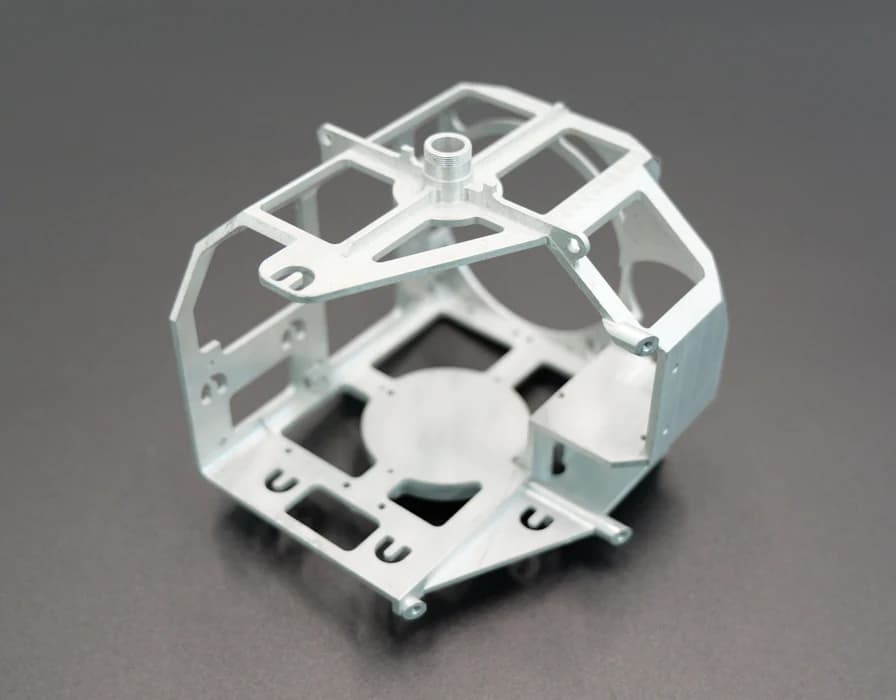
Lightweight Gimbal Frame in 6061 Aluminum manufactured by VOGUC
UAV Components

Lightweight Gimbal Frame

Material
6061 Aluminum
Documented process
CNC Machining

Manufacturing challengeCoaxial center bosses, multi-direction U-slots and deep-hole position control in a thin-wall frame.

Why it matters hereMulti-face access makes this geometry relevant when comparing conventional setups with indexed or five-axis strategies.

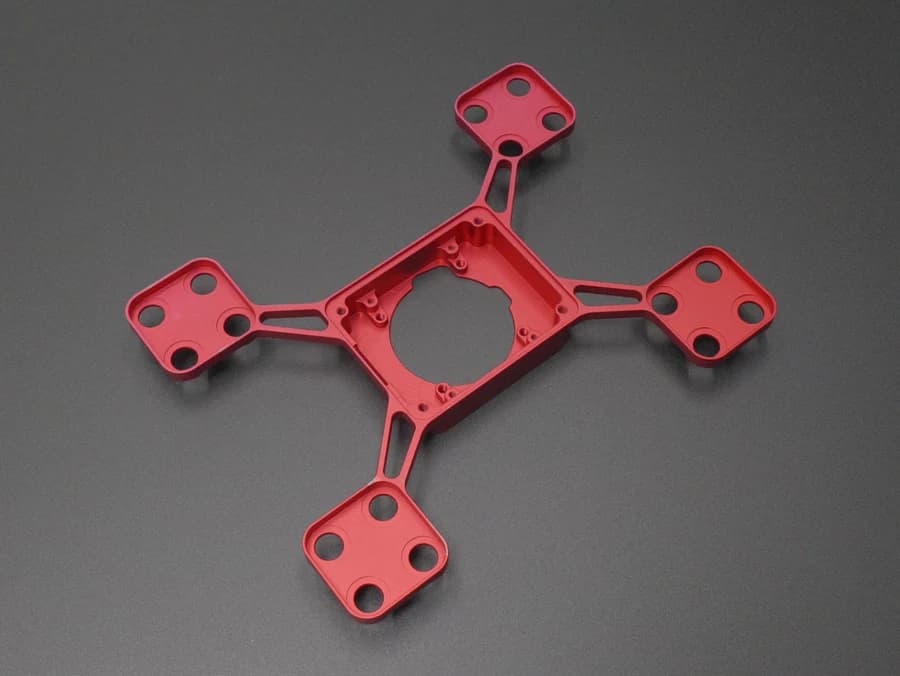
Anodized Quadcopter Frame in 6061 Aluminum manufactured by VOGUC
UAV Components

Anodized Quadcopter Frame

Material
6061 Aluminum
Documented process
CNC · Hard Anodizing

Manufacturing challengeControlling stress distortion and vibration across long, lightweight ribs and narrow pockets.

Why it matters hereThe frame illustrates why tool access and the relationship between features should be reviewed before selecting an axis strategy.

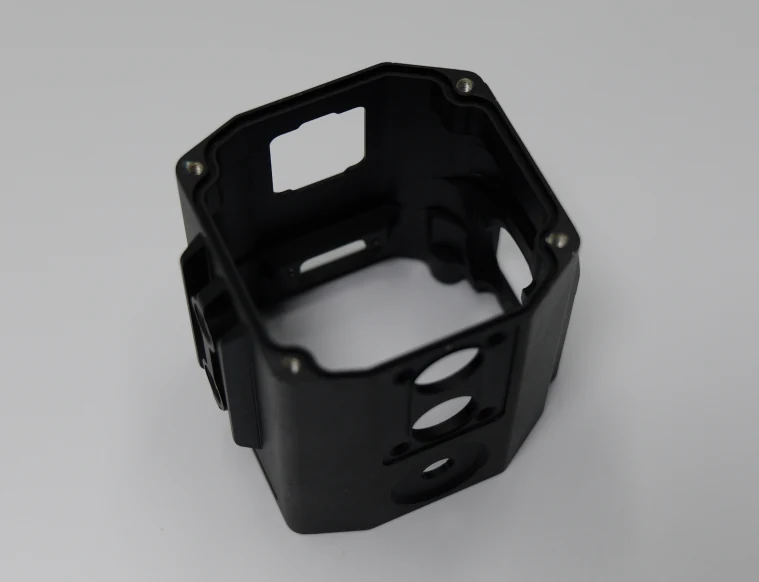
Multi-Channel Manifold in PPSU manufactured by VOGUC
Medical Diagnostics

Multi-Channel Manifold

Material
PPSU
Documented process
CNC Machining

Manufacturing challengeControlling thin-wall bow, temperature-related dimensional drift and the appearance of transparent surfaces.

Why it matters hereChannel access and multi-face relationships should be reviewed before deciding whether additional axes reduce setup risk.

Have a part with a similar material, geometry or functional risk?

Send the drawing for a project-specific review

RFQ PREPARATION

What to include with your enquiry

  1. Use the private RFQ upload for STEP, STP, IGES, IGS, STL, DWG, DXF, PDF or ZIP files; include a controlled 2D drawing when tolerances, datums, threads, finishes or inspection notes matter.
  2. State the released revision, exact material grade and condition, prototype and repeat quantities, and destination or required date.
  3. Identify deep cavities, undercuts, tool-access constraints, critical surfaces and related multi-face features early.
  4. Define the datum structure and required profile, position or other acceptance criteria so machining and inspection routes can be reviewed together.

BUYER QUESTIONS

5-Axis Machining FAQ

Direct answers for engineers and sourcing teams preparing a project review.

What is 5-axis CNC machining and how does it work?

Five-axis CNC machining combines three linear axes with two rotary axes to change the relationship between the cutter and workpiece. In indexed 3+2 machining the rotary axes position the part and remain fixed during a cut; in simultaneous five-axis machining the linear and rotary axes move together when continuous tool orientation is required.

When should a buyer choose 5-axis CNC machining?

Choose 5-axis machining when multi-face access, compound angles, contoured surfaces or datum relationships benefit from fewer setups. A simpler 3-axis or 3+2 route may be more economical when the geometry does not require simultaneous motion.

Is every complex-looking part a 5-axis part?

No. Process selection depends on tool access, setup count, datum transfer, surface requirements and inspection risk. VOGUC reviews whether indexed 3+2, simultaneous 5-axis or conventional milling is the practical route.

What drawing information matters for 5-axis parts?

Provide the 3D geometry and a controlled drawing that defines datums, profile or positional tolerances, critical surfaces, undercuts, material, finish and inspection requirements.

How are complex 5-axis features inspected?

Inspection is planned around the drawing and access. Complex multi-face relationships may be verified by 3D CMM, while other accessible features can use vision measurement, height measurement or appropriate gauges.

RELATED CAPABILITIES

Ready for an engineering review?

Send your drawing files, 3D models, material, quantity and inspection requirements. We will review manufacturability before confirming the quotation.

Start Your RFQ