
Material and finish
Aluminum, stainless steel, steel, brass and engineering plastics can be reviewed. Specify the exact grade, condition and finish; availability is confirmed with the quote.
Compare machining materialsPRECISION TURNED COMPONENTS
CNC turning and turn-mill in Dongguan, China, for custom shafts, bushings and threaded parts. Send drawings for material, fit and inspection review. MOQ 1.
Drawing-led review · MOQ 1 · confidential project handling
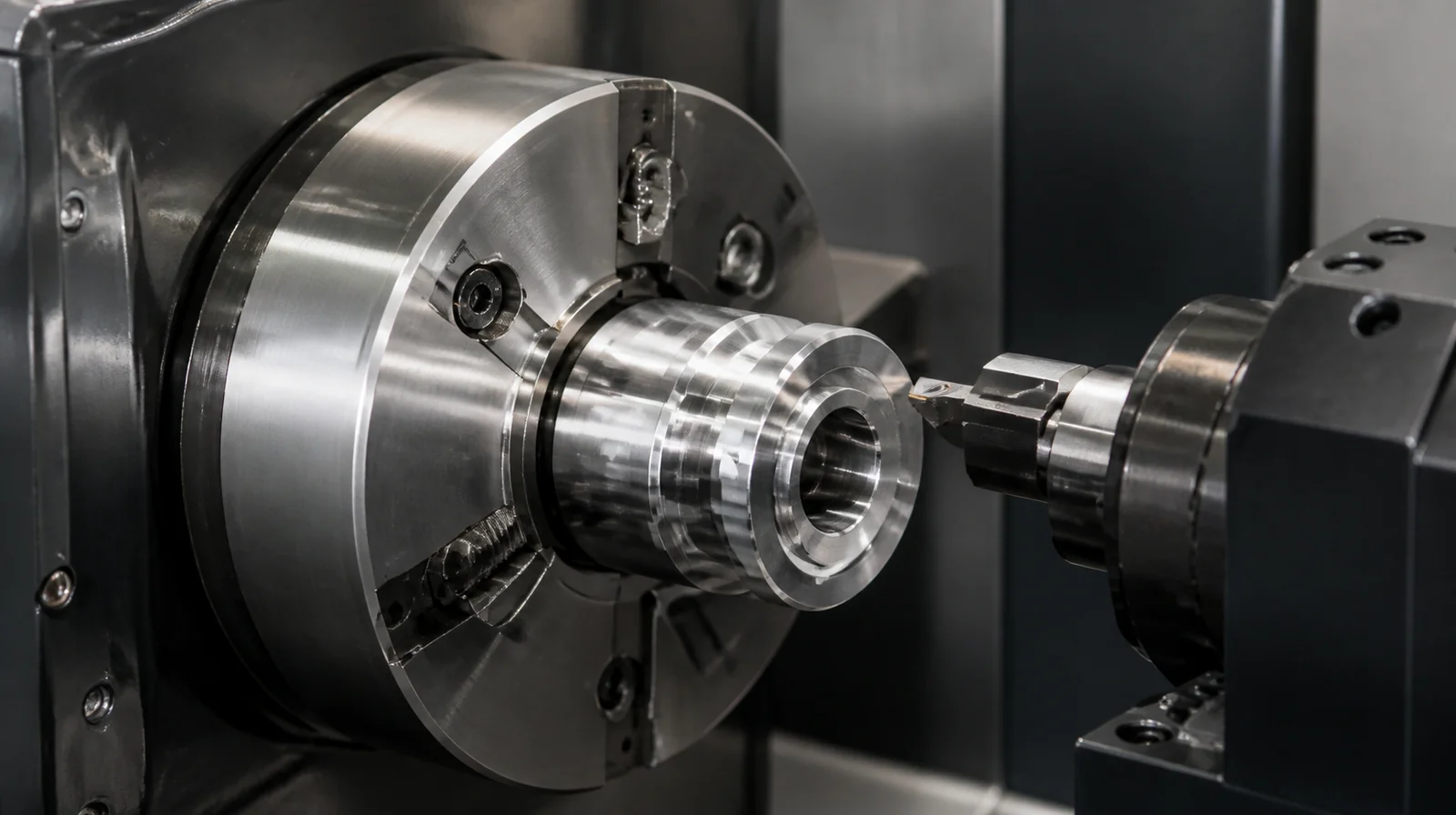
MANUFACTURED IN DONGGUAN, CHINA
Aluminum, stainless steel, steel, brass and engineering plastics can be reviewed. Specify the exact grade, condition and finish; availability is confirmed with the quote.
Compare machining materialsSpecify fits, thread class, runout, sealing surfaces and the inspection datum. Confirm gauges and any material or dimensional report with the quote.
Review inspection capabilitiesSend a released STEP/STP model and PDF drawing if available, material, quantity, revision and destination. Flag missing details for review rather than guessing them.
Upload: STEP, STP, IGES, IGS, STL, DWG, DXF, PDF or ZIP · up to 5 files · 50 MB each · 150 MB total. Export X_T or native CAD to a supported format first.
Next: drawing and process review, then confirmation of price, inspection scope and timing. No date or tolerance is guaranteed before review.
VOGUC manufactures custom turned parts in Dongguan, China. Our turning workflow is suited to rotational components that need controlled diameters, concentric features, threads, grooves and stable surface finishes. Turn-mill planning can reduce transfers when a cylindrical part also includes flats, cross holes or milled details.
PROCESS SELECTION
CNC turning is normally the efficient route when most features are concentric around one axis. Turn-mill or secondary milling should be reviewed when the same part also needs significant off-axis geometry.
BUYER DECISION MATRIX
Choose the least complex route that can hold the required relationship between rotational and off-axis features. Turn-mill can reduce transfers for a suitable cylindrical part, but it is not automatically the fastest or lowest-cost choice; the drawing, stock, access, tolerance and inspection plan must justify the combined route.
| Machining strategy | Best fit | How the setup works | Buyer consideration |
|---|---|---|---|
| Conventional CNC turning | Parts dominated by diameters, bores, shoulders, grooves, tapers and threads around one spindle axis | Turning operations control rotational features; the part may be reversed or supported when both ends require access | Define the functional axis, critical diameter relationships, workholding surfaces and which features must remain concentric or control runout |
| Turning plus secondary milling | A mainly rotational part with a limited number of flats, slots, cross holes or other off-axis details | The turned part transfers to a separate milling setup for the non-rotational features | Confirm the transfer datum and positional relationship; a second setup can be practical when off-axis work is limited and accessible |
| Turn-mill machining | A rotational component with multiple or closely related off-axis features that may benefit from live tooling or combined operations | Suitable turning and milling features are planned in a coordinated machine route, subject to machine access and workholding | Use it when fewer transfers improve access or datum control; do not specify turn-mill only as a label without defining the functional feature relationships |
Not sure which strategy your drawing needs?
Request a drawing-led process reviewDOCUMENTED VOGUC PARTS
These real VOGUC parts show material and geometry questions that inform this service review. The documented process is shown for each example; a new drawing receives its own process and inspection plan.
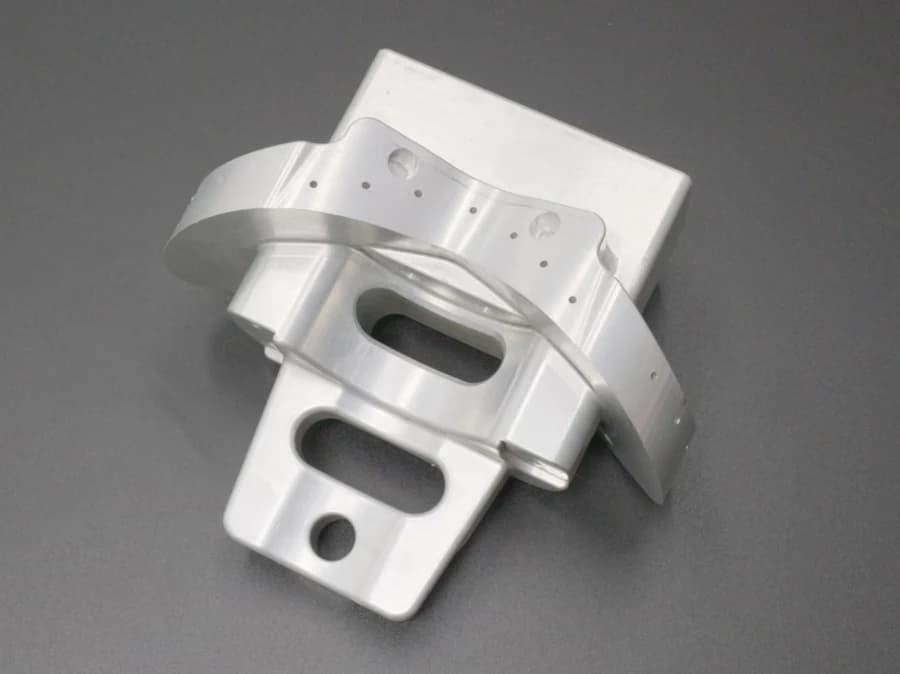
Manufacturing challengeMaintaining sealing-face flatness and parallelism while deburring intersecting deep oil passages.
Why it matters hereCylindrical bores and sealing relationships may require coordinated milling, turning or secondary operations after drawing review.
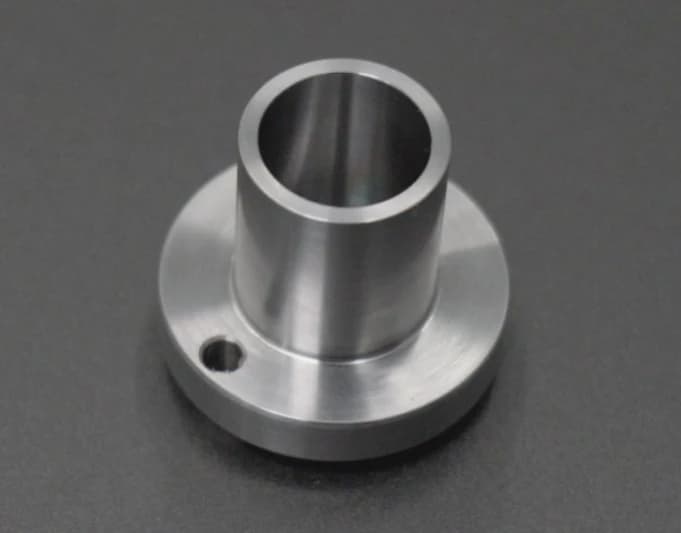
Manufacturing challengeTight internal guide-fit dimensions and cylindricity, followed by heat treatment and a 5–8 μm coating.
Why it matters hereInternal fit, cylindricity, heat treatment and coating thickness must be considered as one turn-mill process chain.
Have a part with a similar material, geometry or functional risk?
Send the drawing for a project-specific reviewRFQ PREPARATION
BUYER QUESTIONS
Direct answers for engineers and sourcing teams preparing a project review.
CNC turning rotates a workpiece around a spindle axis while a computer-controlled cutting tool removes material to form diameters, bores, shoulders, grooves, tapers and threads. The drawing determines the workholding, cutting sequence, datum relationships and whether off-axis features need a secondary milling or turn-mill route.
CNC turning is generally suited to shafts, sleeves, pins, bushings, threaded adapters and other parts dominated by rotational geometry. Flats, cross holes and off-axis features may be combined through turn-mill machining.
Yes, suitable external and internal diameters, grooves and thread features can be reviewed. The drawing should identify the thread standard, class, gauge requirement, reliefs and any sealing or surface-finish requirement.
The inspection method is selected from the drawing and feature relationship. First-off and in-process checks may use suitable gauges or dimensional equipment, while complex datum relationships can require CMM planning.
No. Limited off-axis features can often be added through a controlled secondary milling setup. Turn-mill should be selected when combined operations improve access, datum control or transfer risk for the actual drawing.
Yes. MOQ is one piece, subject to drawing, material and process review. Repeat quantities should also be included in the RFQ so the setup and production route can be evaluated together.
BUYER RESOURCES
Use these technical guides to define the manufacturing route, tolerance and inspection scope before comparing quotations.
Use geometry and functional relationships—not part names—to select the primary process.
Read the guide CNC machining tolerancesPlan fits, runout, surface finish and inspection without over-tolerancing every dimension.
Read the guide Supplier quality checklistConfirm drawing review, measurement evidence and shipment preparation before production.
Read the guideSend your drawing files, 3D models, material, quantity and inspection requirements. We will review manufacturability before confirming the quotation.