
Mechanical demand
Loads, stiffness, wear, fatigue, impact and the consequences of part failure.
MATERIAL SELECTION FOR ENGINEERS & BUYERS
Choose by function—load, environment, weight, conductivity, wear and temperature—then specify the exact grade, condition and finish.
START WITH FUNCTION
Material selection is a system decision. A material that machines easily may still be wrong for the operating environment, finish, inspection method or service life.
Loads, stiffness, wear, fatigue, impact and the consequences of part failure.
Corrosion, chemicals, moisture, vacuum, cleanliness and contact with other materials.
Service temperature, thermal expansion, moisture response and stress-related movement.
Thin walls, deep pockets, small tools, burr risk, workholding and stock availability.
Anodizing, plating, polishing, coating, cosmetic zones and final dimensional allowance.
Exact grade, material certificate, hardness, inspection report and customer-specific documentation.
COMMON VOGUC MATERIAL GROUPS
These are commonly reviewed groups, not a universal stock list or a promise that every grade suits every part. Availability and process fit are confirmed from the drawing.
Often considered whenOften considered when low mass, corrosion resistance, machinability or anodized appearance matters.
Define before quotationDefine the exact alloy, temper, stock form, cosmetic zones and anodizing requirements. Strength, weldability and corrosion behavior differ by grade and condition.
Often considered whenOften considered for strength, corrosion resistance, cleanability and demanding service environments.
Define before quotationState the grade, condition, passivation or polishing requirement and any material-certification scope. Machining behavior is not the same across stainless grades.
Often considered whenOften considered for strength, wear resistance, stiffness, tooling, shafts and load-bearing industrial parts.
Define before quotationSpecify grade, hardness or heat-treatment condition, allowance strategy and corrosion protection. Treatment after machining can affect final dimensions.
Often considered whenOften considered where electrical or thermal conductivity, corrosion performance, appearance or fitting geometry matters.
Define before quotationIdentify the exact alloy, conductivity requirement, plating, contact surfaces and burr limits. Material behavior varies substantially across copper alloys.
Often considered whenOften considered for low mass, electrical insulation, chemical resistance, low friction or application-specific compliance needs.
Define before quotationState the exact grade, reinforcement, service temperature, moisture exposure and dimensional-stability requirement. Plastic parts should not inherit metal tolerances by default.
Often considered whenOften considered when strength-to-weight performance and corrosion resistance justify a higher material and machining cost.
Define before quotationConfirm grade, condition, traceability, surface integrity and critical features. Tool access, heat control and inspection planning require drawing review.
MACHINABILITY IS PART-SPECIFIC
Material affects more than cutting speed. The exact grade and condition can change chip control, heat, burrs, movement, tooling, finishing allowance and inspection. Compare machinability only in the context of the released part requirement.
Swipe horizontally to compare every planning column.
| Material family | Review for machinability | Define before quotation | Possible process impact |
|---|---|---|---|
| Aluminum | Chip form, alloy and temper, residual stress, thin-wall movement and the intended anodizing route. | Exact alloy, temper, stock form, cosmetic faces and dimensions controlled after finishing. | Toolpath, workholding, deburring, stability checks and finishing allowance. |
| Stainless steel | Work hardening, heat, burr formation and grade-dependent cutting behavior. | Exact grade and condition, critical surfaces, passivation or polishing, and certificate scope. | Tool choice, cutting sequence, cycle planning, surface finish and inspection timing. |
| Carbon, alloy & tool steel | Current and final hardness, cutting load, treatment sequence and distortion risk. | Grade, supplied hardness, required heat treatment, coating and final dimensional state. | Machining allowance, treatment handoff, rework risk and post-treatment inspection. |
| Copper & brass | Alloy-dependent chip control, ductility, burr behavior and sensitivity of contact surfaces. | Exact alloy, conductivity need, plating, cosmetic or contact faces and burr limits. | Cutting and deburring route, surface protection, cleaning and final acceptance. |
| Engineering plastics | Thermal expansion, creep, moisture response, reinforcement, edge chipping and free-state movement. | Exact grade, reinforcement, service environment, conditioning state and realistic tolerance need. | Support strategy, cutting heat, handling, stabilization and free-state inspection. |
| Titanium | Heat concentration at the cutting zone, tool access, rigidity and surface-integrity requirements. | Exact grade and condition, traceability, critical features, finish and acceptance evidence. | Tooling and cutting strategy, setup time, process monitoring and inspection scope. |
Do not approve a substitute only because it appears easier to machine. The buyer's qualified design authority should confirm that any alternative still meets function, environment and compliance needs.
Request a Drawing-Specific ReviewSHORTLIST, THEN VERIFY
This table narrows the discussion; it does not replace engineering validation or a released material specification.
Swipe horizontally to compare every selection column.
| Buyer priority | Common starting candidates | What must be confirmed |
|---|---|---|
| Reduce part mass | Aluminum, titanium, engineering plastics | Required strength, stiffness, wall thickness, environment and total project cost |
| Corrosion or chemical exposure | Stainless steel, titanium, selected plastics, treated aluminum | Specific fluid, concentration, temperature, contact time and finish |
| Electrical or thermal conductivity | Copper alloys, brass, selected aluminum grades | Conductivity target, contact surface, heat path, plating and assembly |
| Wear or high load | Steel, hardened steel, selected stainless grades | Hardness, heat treatment, coating, fits and post-treatment inspection |
| Electrical insulation or low friction | PEEK, PTFE, POM and other engineering plastics | Temperature, load, creep, moisture, reinforcement and dimensional stability |
BROWSER-ONLY DECISION AID
Select up to three broad buyer priorities. The assistant shows which material families belong in the first discussion and what information must still be verified before approval.
MATERIAL + FINISH + DIMENSION
A finish can change appearance, corrosion behavior, surface texture and final dimensions. Include it at quotation so machining allowance and inspection timing are clear.
Primarily associated with aluminum. Define type, color, cosmetic zones, masking and whether dimensions apply before or after coating.
Used for project-specific protection, conductivity or wear behavior. Base material, thickness and critical fits must be reviewed together.
Appearance and texture depend on the base material, starting surface and acceptance standard. Identify cosmetic faces on the drawing.
Material condition can influence hardness, distortion and finishing allowance. Confirm the sequence before machining starts.
DOCUMENTED VOGUC PARTS
These approved examples show the documented material, process and manufacturing challenge. They are evidence of specific parts, not blanket proof that every similar application follows the same route.
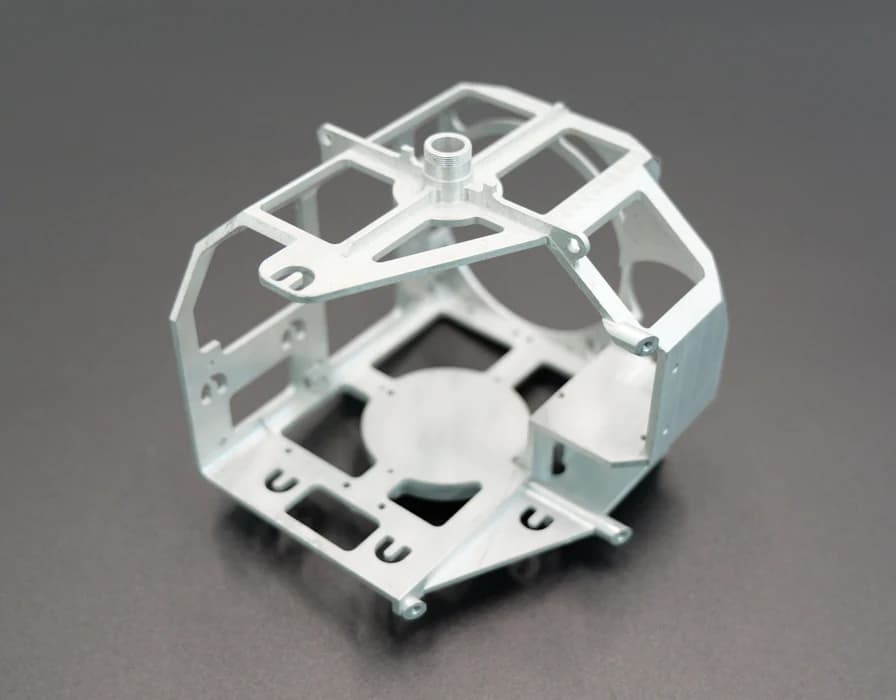
6061 Aluminum · CNC Machining
Manufacturing challengeCoaxial center bosses, multi-direction U-slots and deep-hole position control in a thin-wall frame.
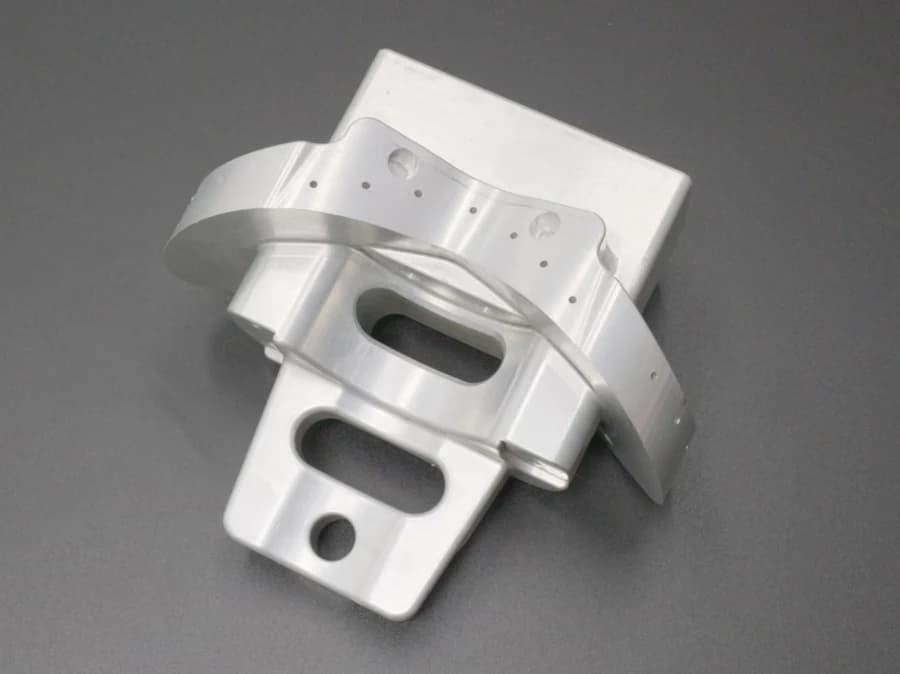
7075 Aluminum · CNC Machining
Manufacturing challengeMaintaining sealing-face flatness and parallelism while deburring intersecting deep oil passages.
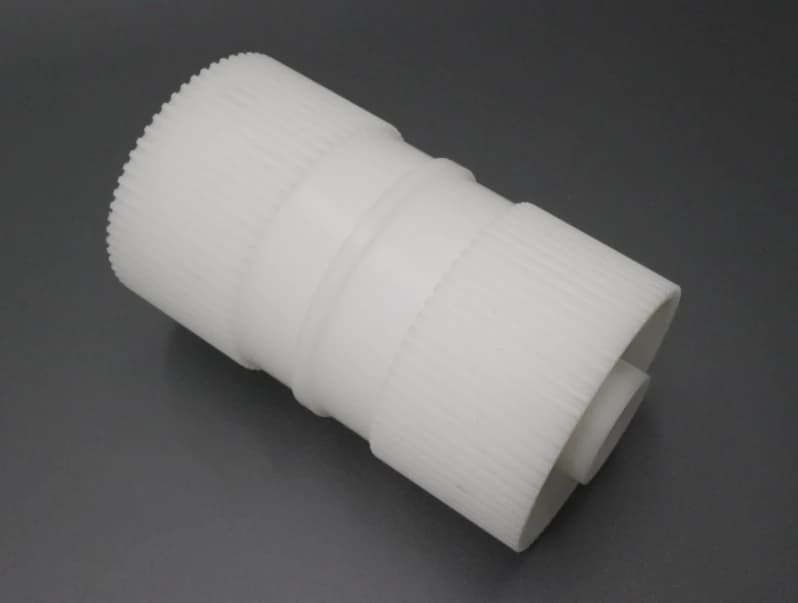
PEEK · CNC Machining
Manufacturing challengeManaging deformation and edge chipping while preserving the geometry of the engineering plastic.
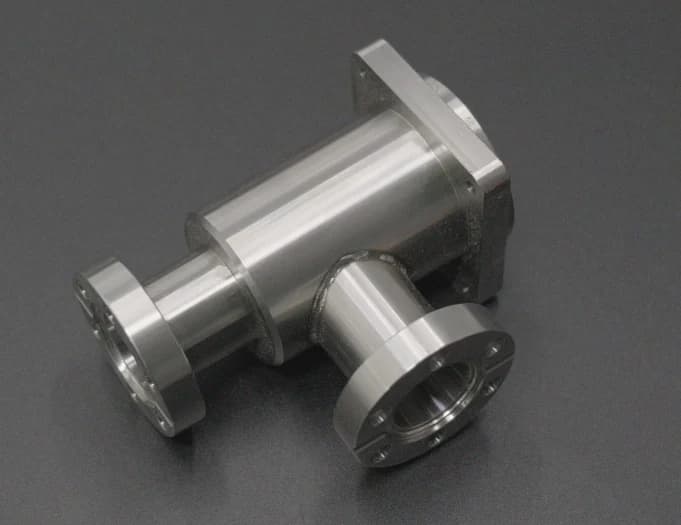
304 Stainless Steel · CNC · Welding
Manufacturing challengeRemoving burrs from intersecting internal bores and preparing complex internal surfaces for polishing.
Material behavior must be reviewed together with geometry, tolerance, finish and inspection.
Review CNC Capabilities
MATERIAL-CONTROLLED RFQ
A clear RFQ prevents a general material label from becoming an uncontrolled substitution. Include the designation and acceptance evidence before the material is purchased.
MATERIAL FAQ
Machinability is not one universal ranking. It describes how the exact grade and condition interact with the part geometry, tooling, workholding, chip control, heat, burrs, finish and inspection plan. A material that cuts efficiently in one part may still create stability or finishing risk in another.
No. Cutting time is only one factor. Stock availability, material price, setup count, distortion risk, finishing, inspection, documentation and application performance can outweigh a faster cutting cycle. Compare approved material alternatives against the complete requirement, not machining speed alone.
State the exact grade, temper or condition, required stock form, quantity, finish and any certificate or traceability requirement. A generic label such as aluminum, stainless steel or plastic is not enough for a controlled quotation.
Neither is universally better. The choice depends on required strength, corrosion behavior, finish, stock availability, application risk and cost. Use the drawing and functional requirements to make the decision, then confirm the grade and temper in the RFQ.
A substitution should not be assumed. Any alternative grade or condition should be reviewed and approved against the design, functional, regulatory and documentation requirements before production.
Yes. Material stability, hardness, heat response, wall thickness, geometry, treatment and inspection setup can all affect a practical tolerance plan. Critical dimensions up to ±0.01 mm require drawing-specific review at VOGUC.
Material certificates and other requested quality documents can be included when agreed during quotation. State the required document type, traceability scope and format before material is ordered.
Yes. The listed grades are common options, not a complete inventory. Send the exact material designation, standard, condition and application requirements so sourcing and manufacturability can be reviewed.
Send the 3D model, drawing, exact grade if known, quantity, finish, inspection scope and delivery requirement. VOGUC will review the practical machining route before confirming the quotation.