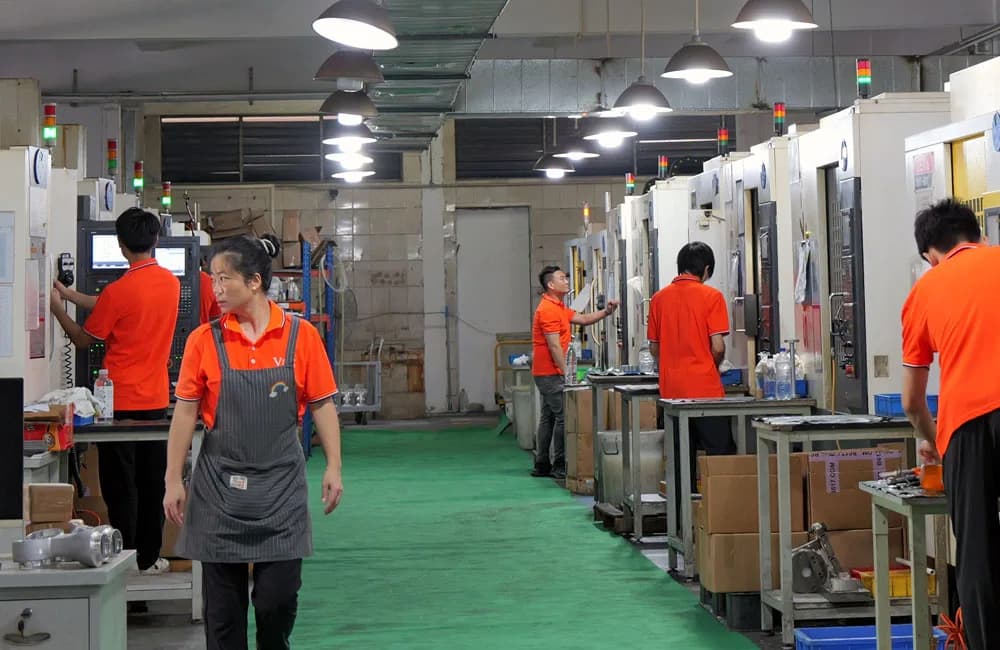
Short answer: A useful CNC machining RFQ should include a usable 3D model, a matching revision-controlled 2D drawing, material and condition, prototype and production quantities, critical tolerances, surface-finish requirements, inspection documents, delivery destination and target timing. Identify which requirements are mandatory and allow the supplier to ask questions before confirming price and lead time.
Why a Complete CNC Machining RFQ Matters
A CNC quotation is a proposed manufacturing route, not only a price per part. The supplier must decide how to hold the workpiece, which machines and tools to use, when to inspect the part, how to coordinate finishing and how to protect it for shipment. Missing information forces the estimator to make assumptions.
Those assumptions can create three different problems. The quote may be higher than necessary because the supplier prices every uncertainty as risk. It may be unrealistically low because inspection, finishing or documentation was omitted. Or it may look competitive initially and then change after the purchase order when the missing requirements become visible.
For overseas B2B projects, unclear scope also creates comparison problems. If one supplier includes certified material, full dimensional reporting and export packaging while another includes only machining, the unit prices do not represent the same deliverable.
The purpose of an RFQ checklist is therefore simple: give each qualified supplier the same controlled input and require each quotation to state the same scope.
If the project team needs supporting guidance before packaging the RFQ, use VOGUC’s CNC machining resource center to review material, tolerance, inspection, cost and supplier-selection decisions without mixing those educational questions into the final quote request.
CNC Machining RFQ Checklist at a Glance
To prepare the package and compare quotations on the same commercial basis, download the editable VOGUC CNC Machining RFQ Checklist and Supplier Quote Comparison workbook. It includes a readiness summary, a three-supplier evaluated-cost table and a critical-feature review sheet. The workbook supports RFQ preparation but does not replace the released drawing, purchase order or customer-specific quality requirements.
RFQ item | Minimum information | Why it affects the quote |
|---|---|---|
3D model | STEP, STP, IGES or X_T file | Defines complete geometry and supports process planning |
2D drawing | Matching revision, units, tolerances and notes | Defines acceptance requirements not visible in the model |
Material | Grade, condition or temper, and certification needs | Changes stock cost, machining behavior and traceability |
Quantity | Prototype quantity, batch quantity and forecast | Changes setup allocation, tooling and production route |
Critical features | Datums, fits, GD&T, threads and roughness | Determines machining and measurement difficulty |
Surface finish | Process, color, thickness, masking and cosmetic zones | Affects dimensions, subcontracting, handling and lead time |
Inspection | Report type, characteristics, sampling and format | Determines measurement time and documentation scope |
Delivery | Destination, Incoterm, target date and packaging | Defines logistics scope and shipment protection |
Commercial scope | Currency, payment terms and quote validity | Makes supplier quotations easier to compare |
The checklist is a starting point. A complex sealing component, medical-device part or multi-axis housing may need additional functional and regulatory information.
1. Send a Usable 3D Model
The 3D model should represent the geometry you want manufactured. STEP or STP is usually the most practical neutral format for CNC quotation because it preserves solid geometry without requiring the supplier to use the same native design software. IGES and X_T can also be reviewed when appropriate.
Before sending the model:
Confirm that the file opens as a complete solid rather than a collection of damaged surfaces.
Remove suppressed or obsolete features that are not part of the quotation.
Include all holes, pockets, threads, grooves and sealing geometry represented in the released design.
State whether reference models, assembly context or mating components are included for information only.
Use a filename that identifies the part number and revision without exposing unnecessary confidential information.
Do not rely on screenshots or rendered images for production geometry. They can clarify orientation or appearance, but they do not provide machinable surfaces or reliable dimensions.
When a native design file helps
A native design file may help when the supplier needs feature history or when a geometry problem cannot be resolved from a neutral model. It should be shared only when useful and through the same confidentiality controls used for the rest of the project. The neutral model and controlled drawing should remain clearly identified as quotation inputs.
VOGUC's website enquiry form includes a private drawing-file upload. You can attach up to five STEP, STP, IGES, IGS, STL, DWG, DXF, PDF or ZIP files, with a 50 MB limit per file and 150 MB total. Use matching part numbers and revisions across the uploaded 3D model, drawing and enquiry details. If the upload cannot accept the project package, or if the drawings require additional confidentiality arrangements, contact Sales@vogucmachining.com before transmission to agree an alternative method.
2. Include a Matching 2D Drawing
The model shows shape; the drawing communicates acceptance. A useful drawing identifies information that cannot safely be inferred from nominal geometry:
Units and drawing revision.
Datum references and GD&T.
Critical dimensions and fits.
Thread standard, class and depth.
Surface roughness on specific faces.
Edge breaks, burr limits and sharp-edge requirements.
Material and heat-treatment notes.
Surface finish, color, masking and cosmetic requirements.
Inspection, marking, cleanliness and packaging notes.
The model and drawing must describe the same revision. If a dimension or feature changed, update both files before requesting the quote. A note such as “use the model for geometry and the drawing for acceptance requirements” helps establish the intended hierarchy, but it does not resolve a direct conflict between them.
State the dimensioning and geometrical-tolerancing system used by the drawing. ASME Y14.5-2018 (R2024) and ISO 1101:2017 provide established frameworks, but the supplier should not assume that one may be substituted for the other. The revision-controlled drawing and contractual requirements remain the acceptance basis.
For a deeper review of selective tight tolerances, see the CNC machining tolerances guide.
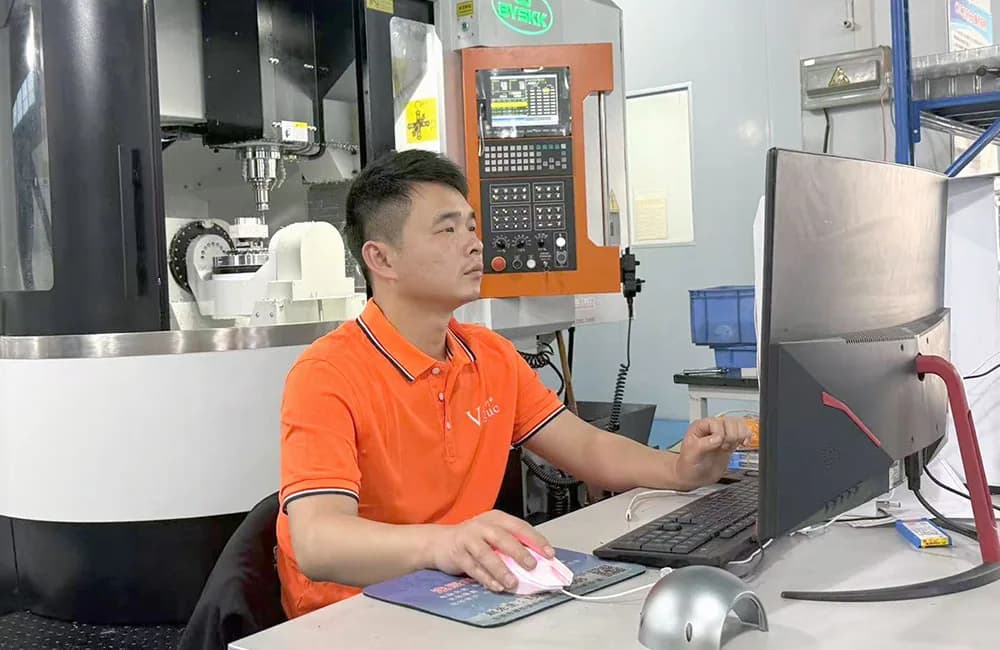
A controlled model and drawing let the machining team review geometry and acceptance requirements together.
3. Specify the Exact Material and Condition
“Aluminum,” “stainless steel” or “plastic” is not enough for a reliable quotation. State the grade and, where applicable, the temper, condition, hardness or product form.
Examples of clearer material descriptions include:
Aluminum 6061-T651 plate.
Aluminum 7075-T651 with material certificate.
Stainless steel 304 in the drawing-specified condition.
POM, natural color, with no recycled substitution.
PEEK grade and compliance requirement defined by the customer.
If the material is not yet fixed, describe the functional need and request clearly separated alternatives. For example, ask for one quote in 6061-T651 and one in 7075-T651 rather than allowing an undocumented substitution.
Define material evidence before quotation
State whether you require a mill certificate, distributor certificate, heat or lot traceability, certificate of conformity, positive material identification or customer-specific documentation. These requirements affect sourcing options, stock availability, record control and price.
The CNC supplier can advise on machinability and availability, but the design authority should approve any material change that affects product performance.
4. Provide Prototype, Batch and Forecast Quantities
Quantity affects far more than material consumption. A one-piece prototype, a batch of 50 and a repeat order of 5,000 may use different stock sizes, fixtures, tooling, inspection plans and production schedules.
Include:
Quantity required for the current order.
Number of part numbers in the RFQ.
Expected repeat batch size.
Estimated annual quantity when known.
Whether the first order is a prototype, first article or production batch.
Whether partial shipment is acceptable.
VOGUC accepts projects from MOQ 1, but the expected repeat quantity still helps the team evaluate whether a simple prototype setup or a more production-oriented fixture is appropriate.
For an initial development part, review the rapid CNC prototyping process and state what the prototype must prove—fit, function, material behavior, appearance or production readiness. This prevents a prototype request from being quoted against assumptions intended for repeat production.
Avoid requesting prices for many hypothetical quantities without explaining the likely purchasing plan. If you need quantity breaks, select a small number of commercially meaningful levels and ask the supplier to identify any tooling or process change between them.
5. Mark Critical Tolerances and Functional Relationships
Do not apply the tightest tolerance to every dimension. Identify the features that control fit, sealing, alignment, motion, bearing location, optical position or assembly performance. Use a suitable general tolerance or title-block rule for ordinary dimensions, and apply individual callouts where function requires them.
For critical features, specify:
Nominal size and tolerance.
Datum structure and geometric requirement.
Whether the requirement applies before or after finishing.
Free-state or restrained inspection where distortion matters.
Fit designation for shafts, bores or mating components.
Required surface roughness and measurement direction.
Any customer-specified measurement or acceptance method.
VOGUC can review critical dimensions down to ±0.01 mm, but this is conditional capability rather than a blanket promise. Geometry, part size, wall thickness, material, tool access, finish and measurement uncertainty must be evaluated before the quotation is confirmed.
Mid-article CTA — Send Your Drawing for Review: Share the 3D model, matching drawing, material, quantity and marked critical dimensions. VOGUC can review the manufacturing and inspection scope before confirming a quotation.
6. Define Surface Finishes and Cosmetic Requirements
Surface finishing must be included in the initial RFQ when it affects dimensions, corrosion protection, appearance, conductivity, wear or assembly. Adding it after machining can invalidate the original process and price.
For anodizing, plating, passivation, polishing, sandblasting, powder coating or another treatment, state:
Process or governing specification.
Target color or approved reference sample.
Functional thickness range when required.
Masked threads, bores, sealing faces, contacts or grounding surfaces.
Final dimensional requirements after coating.
Cosmetic zones and acceptable variation.
Testing or certificate requirements.
“Black anodized” is not a complete cosmetic standard. Alloy, temper, surface preparation, production lot and viewing conditions can influence appearance. If color is important, define how the sample and production batch will be approved.
Also state whether machined surfaces need a specific toolpath direction, whether handling marks are acceptable and whether sharp cosmetic edges must be protected during finishing and shipment.
7. Agree on Inspection and Quality Documents
“Inspection required” or “100% inspection” is too broad for a comparable quote. Define what must be measured, how many parts must be inspected and what evidence must be delivered.
Possible requirements include:
First-article inspection report.
Full dimensional report.
Ballooned drawing and characteristic list.
CMM report for datum-related geometry.
Material certificate.
Finish or heat-treatment certificate.
Certificate of conformity.
Functional, pressure, leak or assembly test when applicable.
Customer-specific report template.
For each report, state whether you need actual measured values or only pass/fail results. Identify the sample quantity and the dimensions to be recorded. If every part must be checked for selected critical features, separate that requirement from a full report on every dimension.
For results close to a specification limit, agree how measurement uncertainty will be handled and what decision rule determines acceptance. NIST’s conformity-assessment guidance explains why measurement uncertainty and the consequences of false acceptance or false rejection matter; a report of measured values alone does not define the contractual acceptance rule.
VOGUC’s available inspection equipment includes 3D CMM, 2.5D vision measurement and digital height measurement. Equipment is selected according to feature geometry, tolerance and access. A CMM is not automatically the best instrument for every dimension.
Review the VOGUC quality control process and sanitized dimensional-report sample before defining the evidence package.
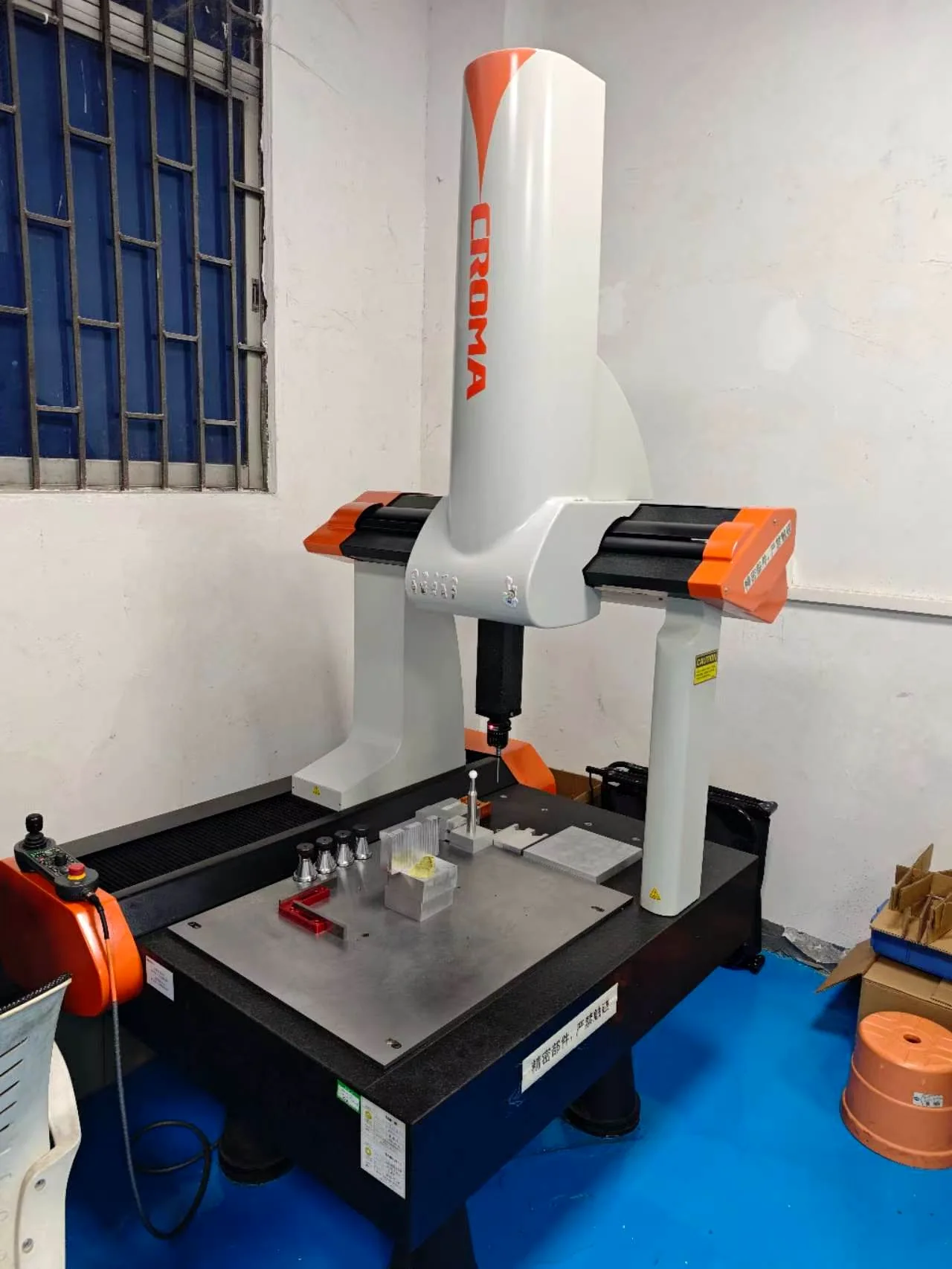
Inspection scope should be connected to the drawing, sample plan and acceptance decision before production begins.
8. Explain Application and Assembly Context
You do not need to disclose confidential product strategy, but limited functional context can improve DFM quality. Tell the supplier whether the part is a fixture, housing, sealing component, optical mount, rotating part, medical-device component, robotics bracket or another type of functional item.
Useful context includes:
Which faces mate with other components.
Where sealing, bearing or sliding contact occurs.
Which surfaces are cosmetic.
Whether the part will be welded, bonded, pressed, fastened or assembled later.
Whether temperature, chemical exposure, vibration or repeated load matters.
Whether the prototype will be used for fit, appearance or functional testing.
This context helps the supplier ask better questions. It does not authorize a design change. Any proposed change to material, geometry, tolerance, finish or acceptance must be documented and approved by the design authority.
9. Define Delivery, Packaging and Commercial Scope
State the delivery destination and requested date. Clarify whether the quotation should include freight and which Incoterm applies. If the supplier does not know the destination or shipment scope, two quotes may include different logistics assumptions.
For packaging, identify risks such as:
Cosmetic faces that must not touch each other.
Thin walls or long shafts that can bend.
Threads, sealing faces or precision bores that need protection.
Finished surfaces that require bags, film, foam or individual wrapping.
Cleanliness requirements before sealing.
Labels, batch identity or customer barcodes.
For repeat export shipments, agree whether inspection documents travel inside the package, by email or through a customer portal.
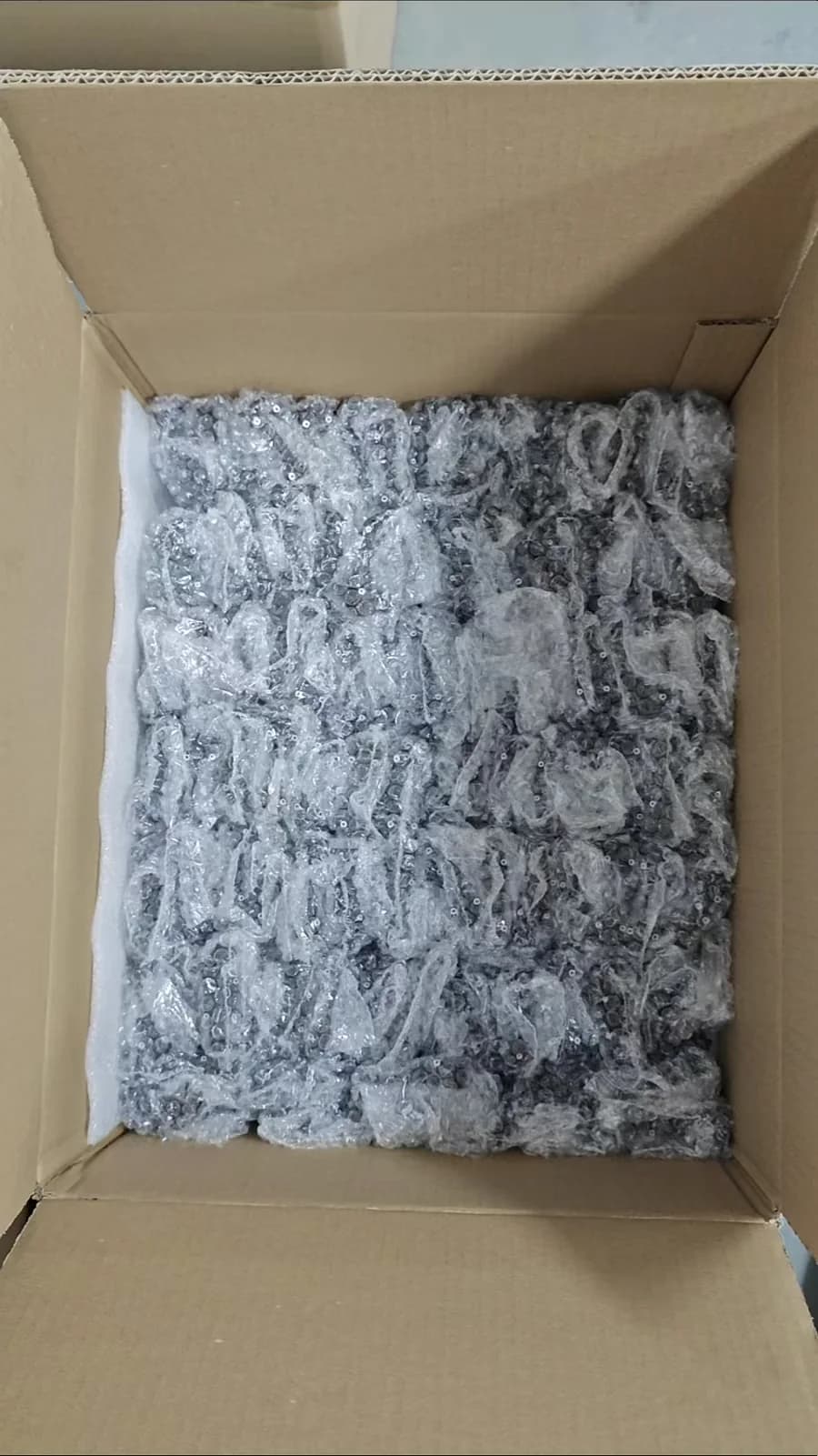
Packaging is part of the delivered quality because conforming parts can still be damaged between final inspection and customer receipt.
10. Request a Quote with Clear Assumptions
A useful quotation should state what is included and what remains subject to confirmation. Ask suppliers to identify:
Material, grade, condition and certificate scope.
Quantity, setup or tooling charges and quantity-break assumptions.
Machining and secondary operations.
Inspection and documentation.
Packaging and delivery terms.
Lead-time starting condition.
Quote validity and payment terms.
Technical exclusions or unresolved questions.
Compare the complete deliverable rather than only the unit price.
Quote comparison item | Supplier A | Supplier B | Supplier C |
|---|---|---|---|
Correct model and drawing revision | |||
Material and certificate included | |||
Finish, masking and cosmetic scope | |||
Inspection report and sample plan | |||
Tooling or NRE separated | |||
Packaging and freight scope | |||
Lead-time starting point | |||
Open technical assumptions |
An unusually fast quotation for a complex drawing is not automatically a benefit. Check whether the supplier reviewed tolerances, tool access, finishing and inspection or simply priced nominal geometry.
A Worked RFQ Example
Consider a machined aluminum sensor housing used in automation equipment. A weak request says:
Please quote 100 aluminum housings. Black anodized. Best price and fast delivery.
The supplier must guess the alloy, drawing revision, tolerance scope, anodizing requirement, inspection documents, packaging, destination and definition of “fast.”
A stronger RFQ says:
Part: sensor housing, part number SH-104, revision C.
Files: SH-104-C.step and SH-104-C.pdf.
Material: 6061-T651; material certificate required.
Quantity: 5 first articles and 100 production parts; forecast 400 per year.
Critical features: two mounting bores, sealing face flatness and connector position marked on the drawing.
Finish: black anodizing; mask two threads and grounding face; final dimensions apply after finish where shown.
Inspection: first-article full dimensional report with actual values; material and finish certificates; production sampling for marked characteristics.
Packaging: protect sealing and cosmetic faces individually.
Delivery: DAP [named customer location], Germany, Incoterms® 2020; requested first-article date and production date stated separately.
The named place is essential. The ICC Incoterms® 2020 rules allocate delivery tasks, costs and risks through 11 trade terms, so “DAP Germany” is less precise than “DAP [named customer location], Germany, Incoterms® 2020.”
The second request allows engineering, quality and purchasing to evaluate the same deliverable. It also gives the supplier enough information to propose DFM questions before price and lead time are fixed.
Common RFQ Mistakes That Delay a Quote
Sending only a screenshot or an STL file
An STL may be useful for visualization or some additive workflows, but it is usually a poor master format for precision CNC quotation. Send a solid CAD model and dimensioned drawing when possible.
Mixing drawing revisions
A model at revision B and drawing at revision C create immediate uncertainty. Use matching filenames and remove obsolete files from the RFQ package.
Using blanket tight tolerances
Applying ±0.01 mm or a tight profile requirement to every feature increases machining and inspection risk. Identify the dimensions that protect function.
Omitting finish thickness and masking
Coating can change fits, thread condition and electrical contact. Define final-state dimensions and masked surfaces before machining begins.
Asking for “best price” without a common scope
The lowest number is not meaningful if the quotations include different materials, documentation, finishing or delivery terms.
Hiding the expected production quantity
If the first order is one prototype but the design may require 2,000 parts annually, tell the supplier. The prototype can still be quoted separately, while the future route is reviewed early.
How VOGUC Reviews a CNC Machining RFQ
VOGUC provides one-stop custom CNC machining services centered on CNC milling and CNC turning. The review starts with the model and drawing, then considers material, quantity, critical dimensions, tool access, finishing, inspection evidence and delivery requirements.
Depending on the part, the proposed route may use CNC milling, CNC turning or turn-mill machining, 5-axis machining or a combined process. The machine label is selected from the geometry and risk rather than from a marketing claim.
VOGUC operates with 30 CNC machines in a 2,000+ m² facility and supports MOQ 1. Suitable samples can be completed in as fast as three days after engineering review, but actual lead time depends on geometry, material availability, finishing and inspection scope. Critical dimensions up to ±0.01 mm are reviewed feature by feature.
The quotation should be treated as project-specific. No general website statement replaces review of the controlled drawing.
Frequently Asked Questions
What files are best for a CNC machining quote?
Send a STEP or STP solid model together with a matching dimensioned PDF or DWG drawing. The model defines geometry; the drawing defines tolerances, GD&T, threads, finishes, material and acceptance notes. IGES and X_T can also be reviewed.
Can I request a quote with only a 2D drawing?
Some straightforward parts can be quoted from a complete 2D drawing, but a 3D model normally improves geometry interpretation and process planning. The supplier may request additional sections or details if the drawing is ambiguous.
Do I need to specify every tolerance?
Every feature needs an acceptance rule, but not every dimension needs an individual tight tolerance. Use a clearly defined general tolerance for ordinary dimensions and individual callouts for critical sizes, datum relationships, fits and functional surfaces.
Should I provide both prototype and production quantities?
Yes. State the immediate order quantity and the expected repeat quantity when known. This helps the supplier compare a simple prototype setup with a production-oriented fixture or inspection plan.
What inspection documents should I request?
Choose documents according to part risk and customer requirements. Options may include a first-article report, full dimensional report, CMM output, material certificate, finish certificate, balloon drawing or certificate of conformity. Define the sample quantity and recorded characteristics before quotation.
How should surface finishing be specified?
State the finish process or specification, color, functional thickness where needed, masked areas, cosmetic zones and final dimensional requirements. Approve a production-representative sample if appearance is critical.
Can the supplier recommend a different material or process?
The supplier can propose an alternative with a clear explanation of manufacturability, cost or lead-time implications. The design authority should approve any change that affects controlled geometry, material, performance, finish or acceptance.
How quickly can VOGUC return a quotation?
Quotation timing depends on drawing completeness and project complexity. A clear RFQ reduces technical questions, but VOGUC does not promise an instant price before the manufacturing and inspection scope is understood.
Conclusion
An accurate CNC machining quote begins with controlled information. Send the model and drawing together, identify the exact material and quantity, apply tolerances where function requires them, define finishing and inspection, and state the delivery and commercial scope. Then require each supplier to list assumptions and exclusions.
This approach may take a few extra minutes before the RFQ is sent, but it reduces avoidable clarification, makes quotations comparable and creates a stronger foundation for first-article approval and repeat production.
Send a Complete RFQ to VOGUC
Ready to review a custom machined part? Send your CAD model, drawing, material, quantity, critical requirements, finish, inspection documents and destination. VOGUC will review the project before confirming the manufacturing route, quotation and lead time.
CTA: Submit a complete CNC machining RFQ — Use the checklist above and identify any requirement that is still open for engineering review.
Editorial Sources and Standards Context
The references below support the terminology and decision framework used in this guide. They do not replace the revision-controlled customer drawing, purchase order, contractual quality clauses or applicable regulatory requirements.