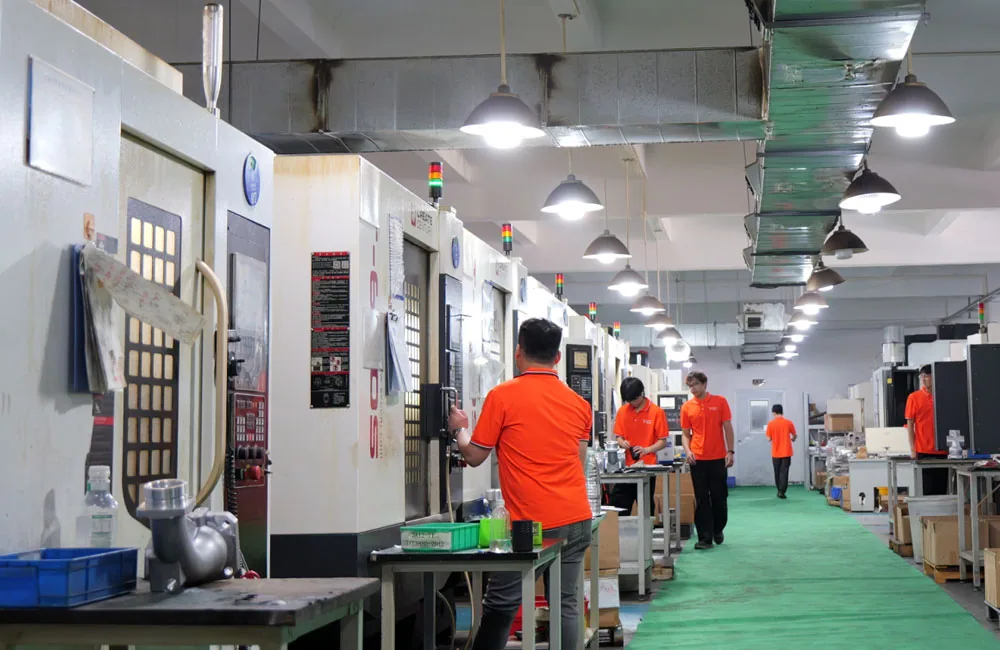
Short answer: CNC machining cost is mainly built from raw material, programming and setup, machine time, tooling, finishing, inspection, documentation, packaging and delivery scope. The strongest cost levers are usually part geometry, material and stock form, the number of setups, tolerance and surface-finish requirements, inspection scope and order quantity. There is no responsible universal price per part without reviewing the model, drawing and purchasing requirements.
Why CNC Machining Does Not Have a Standard Price List
A standard fastener can have a catalogue price because its material, geometry, tolerance, quantity and supply route are already defined. A custom CNC part is different. Its quotation is a manufacturing plan created from the files and requirements supplied by the buyer.
Two parts with similar outside dimensions may require very different work. One may be cut from readily available aluminum in two simple operations. The other may need certified stainless steel, deep internal features, several reorientations, selective tight tolerances, cosmetic finishing and a full dimensional report. Their visible size does not explain their true production effort.
This is why a low number alone is not enough to judge a CNC quotation. A useful comparison asks whether each supplier priced the same revision, material, quantities, finish, inspection documents, packaging and delivery scope.
For buyers, the practical objective is not to force every requirement lower. It is to separate functional requirements from habits, defaults and assumptions. Requirements that protect fit, safety, life or compliance should remain. Requirements that do not affect function can be reviewed before they create unnecessary machining or inspection work.
VOGUC’s CNC machining resource center groups the related material, tolerance, inspection, supplier-selection and RFQ guidance so buyers can evaluate those decisions before comparing delivered cost.
CNC Machining Cost Structure at a Glance
Cost element | What the supplier evaluates | What the buyer should define |
|---|---|---|
Material | Grade, stock form, availability, waste and machining behavior | Exact grade, condition, certification and approved alternatives |
Engineering | File quality, manufacturability review and process planning | Matching 3D model and controlled drawing |
Setup | Workholding, datum transfer, machine loading and first-part proving | Functional datums, accessible features and meaningful batch quantities |
Machine time | Cutting, tool changes, probing, reorientation and handling | Geometry, finish, critical features and acceptable design alternatives |
Tooling | Standard or special tools, tool wear and reach | Thread forms, corner radii, depths and feature standardization |
Inspection | Measurement method, sampling, reports and traceability | Critical characteristics, sampling plan and document format |
Secondary work | Anodizing, plating, heat treatment, marking and cleaning | Process specification, color, masking and acceptance criteria |
Logistics | Protection, packing, freight scope and delivery destination | Incoterm, destination, timing and packaging expectations |
The relative importance of each item changes by project. Material may dominate a large, low-complexity component, while setup and inspection may dominate a one-piece precision prototype.
1. Material Affects More Than Raw Stock Price
Material influences both the purchase price of the blank and the time required to machine it. The estimator considers grade, condition, stock size, availability, cutting behavior, tool wear, heat generation, distortion risk and the amount of material that must be removed.
For example, “aluminum” is not a complete quotation requirement. Aluminum 6061 and 7075 have different material properties, availability and application considerations. Stainless grades also differ in machining behavior. Engineering plastics can require careful support and temperature control even when the raw material looks simple to cut.
Buyers can improve cost clarity by stating:
Exact grade and temper or condition.
Required stock form when it matters.
Whether a mill or material certificate is mandatory.
Whether customer-approved equivalent material is allowed.
Whether appearance, conductivity, corrosion resistance, strength or temperature performance controls the choice.
Do not substitute a cheaper grade only because it machines more easily. Material changes must be approved by the design authority against the real application. If the choice is still open, request separate alternatives rather than allowing an undocumented substitution. The 6061 versus 7075 aluminum guide explains how to frame that decision without treating one alloy as universally better.
2. Geometry Determines Cutting Time and Access
Machine time is strongly affected by how much work the geometry requires, not simply by the finished part's volume. Features that can increase time or process complexity include:
Deep pockets that require long-reach tools and conservative cutting.
Thin walls that can deflect or vibrate.
Small internal corner radii that require smaller cutters.
Features on many faces that require reorientation or multi-axis access.
Deep small-diameter holes with difficult chip evacuation.
Undercuts or internal features needing special tools.
Freeform surfaces requiring many closely spaced toolpaths.
Burr-sensitive intersections and inaccessible edge requirements.
The useful question is not “Is this part complex?” but “Which features create additional operations, slow cutting or special access?” A supplier's DFM feedback should identify the cost-driving feature and explain what could change without compromising function.

Multi-face access, workholding and datum transfer can affect both machining time and dimensional control.
Internal corners and tool diameter
A rotating milling cutter cannot create a perfectly square internal corner. A very small radius may force the use of a smaller, less rigid tool and additional passes. If the corner does not mate with another component, a larger radius may reduce cutting time. If a square mating part must fit, a relief feature may be more practical than making the entire pocket radius extremely small.
Deep features and tool reach
Long tools are less rigid than short tools. Deep cavities and deep narrow slots can therefore require slower cutting, staged tools or a different setup. Before increasing depth, confirm whether the full feature is functionally necessary and whether access can be improved from another direction.
3. Setup and Workholding Create Fixed Project Cost
Before stable production begins, the machining team must interpret the files, plan operations, prepare the program, select tools, establish workholding and prove the first part. Much of this work exists whether the order contains one part or many.
A setup is not only the act of putting material in a machine. It can include:
Selecting or preparing fixtures, jaws, soft jaws or other workholding.
Establishing datums and tool offsets.
Loading and proving the machining program.
Repositioning the workpiece for another face or operation.
Moving the part between milling, turning or secondary equipment.
Verifying the first-off part before the remaining quantity proceeds.
Reducing setups can lower handling and datum-transfer risk, but it is not automatically correct to specify 5-axis machining for every part. A simple bracket may be more economical on a standard milling route. A complex multi-face component may benefit from 3+2 or simultaneous 5-axis access when it removes repeated clamping or improves feature relationships. See the 5-axis CNC machining service for the geometry and review criteria behind that decision.
4. Tolerances Should Follow Function, Not Habit
Tight tolerances can add cost through slower finishing passes, more controlled setups, additional measurement, temperature awareness and a greater risk of rework or rejection. The effect is usually strongest when tight limits apply to many features rather than a small number of functional characteristics.
A drawing that applies the same tight tolerance everywhere does not tell the supplier which features actually control fit or performance. A better drawing distinguishes:
Critical fits and interfaces.
Datum-related feature relationships.
Sealing or bearing surfaces.
Features controlled by assembly clearance.
Non-critical dimensions that can use an appropriate general tolerance.
The drawing should identify the governing dimensioning and tolerancing system. ASME Y14.5-2018 (R2024) provides one established framework, but it does not replace the revision-controlled drawing or authorize the supplier to reinterpret a customer requirement.
VOGUC can review drawing-defined critical dimensions up to ±0.01 mm where the geometry, material, feature access and measurement method support the requirement. That statement is not a blanket tolerance for every feature on every part. Feasibility must be confirmed from the controlled drawing.
Use the CNC machining tolerances guide to prepare selective, measurable callouts before requesting a quote.
Cost-review checkpoint: Ask which tolerance or geometric control creates the greatest process or inspection burden. Do not relax it until the design authority confirms that function remains protected.
5. Surface Finish and Secondary Processes Change the Route
Surface requirements affect both machining and downstream work. A roughness callout may require extra finishing passes or a different process. Anodizing, plating, passivation, bead blasting, polishing, heat treatment and laser marking can add handling, subcontract coordination, masking, inspection and transport between operations.
ASME B46.1-2019 (R2026) defines surface texture terms and parameters for roughness, waviness and lay. A buyer should still identify the required parameter, limit, location and evaluation conditions on the controlled drawing rather than requesting a generic “smooth finish.”
Define the requirement clearly:
Finish process and governing specification.
Color or approved range.
Thickness where functionally relevant.
Masked threads, contacts, bores or sealing faces.
Cosmetic zones and acceptable visual variation.
Pre-finish or post-finish dimensional requirements.
Marking content, location and legibility.
Avoid vague notes such as “good finish” or “cosmetic quality.” They invite different assumptions from different suppliers. If only one face is visible, identify that face rather than applying the same cosmetic expectation to the entire part.
6. Inspection and Documentation Are Part of the Deliverable
Inspection is not free administration added after machining. It requires measurement planning, calibrated equipment, operator time, report preparation, record control and sometimes special fixtures.
Common requirements include:
First-off or first-article inspection.
Defined sampling of critical characteristics.
Full dimensional inspection report.
Ballooned drawing matched to report results.
3D CMM measurement for complex relationships.
Material certificate or certificate of conformity.
Finish, heat-treatment or other process certificates.
Customer-specific report templates.
State which characteristics require reporting and whether the request applies to the first piece, every batch, a sample or every part. “Full inspection” can mean different things unless scope and format are defined.
If measured results may fall close to a specification limit, the parties should also agree how measurement uncertainty and the acceptance decision rule will be handled. NIST’s conformity-assessment guidance explains that the selected decision rule affects the risks of accepting a nonconforming part or rejecting a conforming one. This is a project-specific quality decision, not a universal rule that the supplier may choose silently.
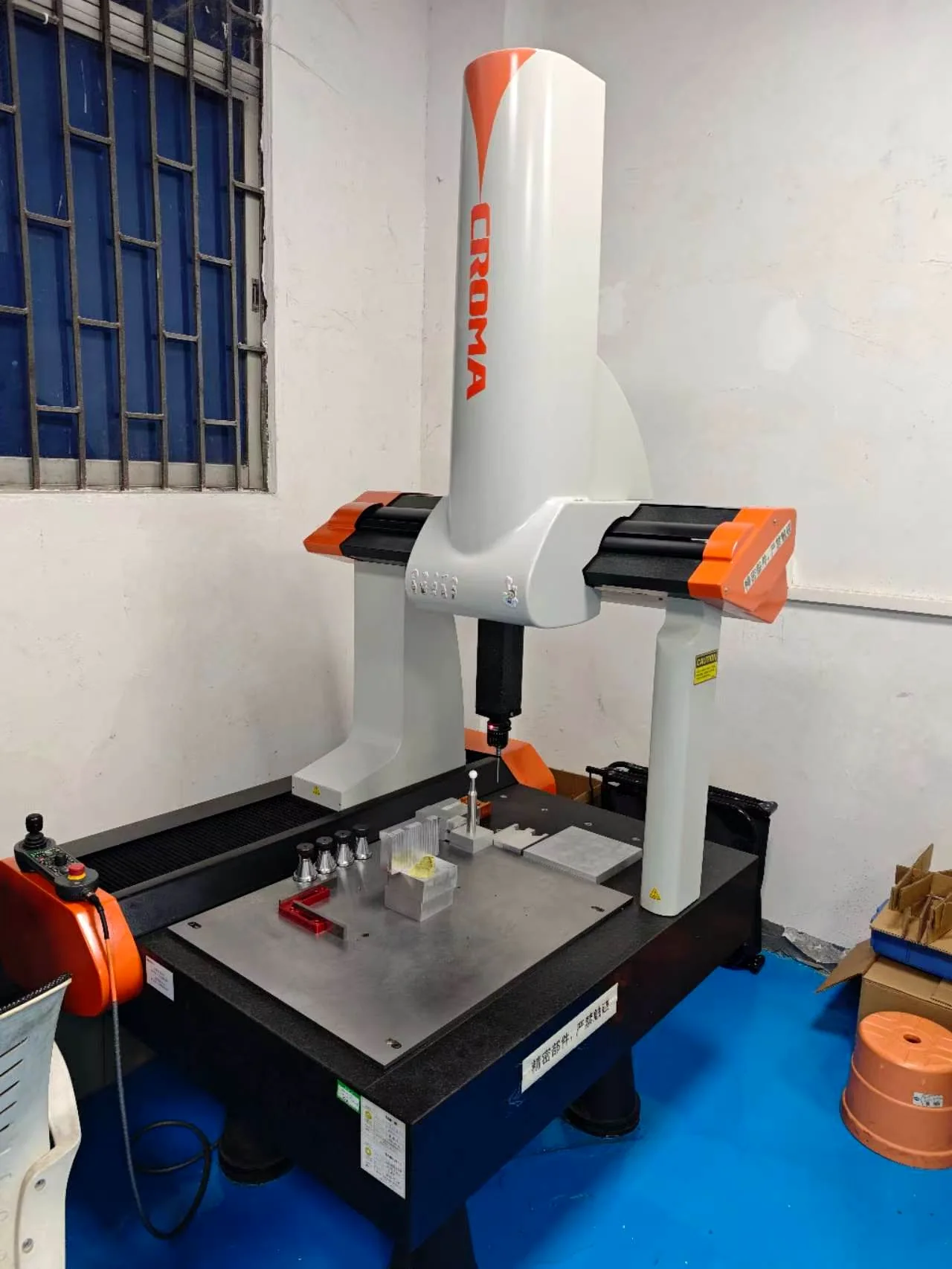
Inspection scope should be planned from the drawing and priced as part of the agreed deliverable.
VOGUC has 3D CMM, 2.5D vision measurement and digital height measurement capability. The appropriate method depends on feature geometry, datum relationships, access and reporting needs. Review the quality-control process before specifying a method for every dimension.
7. Quantity Changes Unit Cost and Process Planning
Programming, setup and first-part proving are largely fixed project activities. At a higher quantity, those activities are distributed across more parts, which commonly reduces unit cost. Higher quantities can also justify more efficient fixtures, tool planning or material purchasing.
However, the relationship is not a simple discount curve. A large volume may require different tooling, more inspection, batch traceability, scheduled releases or production fixtures. The best RFQ therefore asks for commercially meaningful quantity levels.
Purchasing situation | Useful quantity information | Quotation implication |
|---|---|---|
One-off prototype | Immediate quantity and likely design revision | Simple flexible setup may be preferable |
Validation batch | Current batch plus expected next phase | Supplier can distinguish temporary and production tooling |
Repeat low volume | Batch size, annual forecast and release frequency | Setup reuse and stock planning can be evaluated |
Production program | Forecast, order cadence and change-control plan | Capacity, fixture and quality planning become more important |
VOGUC accepts MOQ 1 projects, but the quotation should still include the expected path after the first part. A prototype-only setup may not be the best basis for repeat production.
8. Why a CNC Quote Can Change After a Revision or Reorder
A quotation applies to the technical and commercial basis stated when it was issued. A later quotation may change even when the part name looks the same, because the drawing revision, model, quantity, release pattern, material condition, finish, inspection package, delivery destination or requested timing has changed. Material, outside-process and freight availability may also need to be reviewed again after the quotation validity period expires.
For repeat orders, ask the supplier to separate:
Recurring part price at the stated quantity.
One-time engineering, special tooling or fixture charges.
Setup, first-off inspection or reporting activities that still occur for each batch.
Tooling or fixtures that can be reused only while the revision and condition remain suitable.
Quote validity, currency, delivery basis and the assumptions that can trigger repricing.
Do not assume that every first-order charge must repeat, or that a previous unit price automatically applies to a new revision or release quantity. Reference the previous quotation number, exact part number, revision, quantity, destination and requested date, then ask the supplier to identify what changed. If the technical package changes after quotation, obtain an updated commercial confirmation before using the old price as a purchase baseline.
9. Lead Time, Packaging and Delivery Define the Commercial Scope
An urgent delivery request can change machine scheduling, material sourcing, finishing coordination and freight options. A realistic quotation should distinguish machining lead time from the total time needed for material, finishing, inspection, packaging and transport.
For suitable prototypes, VOGUC can complete samples as fast as three days after engineering review and requirement confirmation. This is conditional, not a universal promise. Material availability, geometry, finishing, inspection documentation and quantity can extend the schedule.
European and US buyers should also clarify:
Delivery destination and postal code.
Requested Incoterm.
Whether freight, duties or taxes are included.
Required packaging and corrosion protection.
Whether partial shipment is acceptable.
Whether the target date refers to factory completion or arrival.
Use the ICC format [chosen rule] [named port, place or point] Incoterms® 2020. The current ICC Incoterms® 2020 guidance covers 11 trade terms and allocates specified delivery obligations, costs and risks; the trade term alone does not make an incomplete destination comparable.

Protective packaging and delivery scope should be compared alongside the machining price.
What Buyers Can Change Without Hiding Requirements
Cost reduction should remove unnecessary work, not obscure acceptance criteria. The following review separates responsible optimization from risky price cutting.
Review question | Responsible action | Risky shortcut to avoid |
|---|---|---|
Are all tight dimensions functional? | Keep critical callouts and relax only approved non-critical features | Remove tolerances without engineering approval |
Is the selected material mandatory? | Compare approved grades or stock forms against function | Substitute an undocumented lower grade |
Are all cosmetic surfaces visible? | Mark appearance zones and measurable acceptance criteria | Use vague “perfect finish” language |
Does geometry require many setups? | Review access, radii, depths and possible part separation | Demand a cheaper process that cannot hold the requirement |
Is full reporting needed on every unit? | Define critical features, sample size and report frequency | Delete traceability required by the customer or industry |
Are quantity breaks meaningful? | Quote realistic prototype and production quantities | Request many hypothetical levels with no forecast |
Mid-article RFQ review
If a quotation is higher than expected, send VOGUC the controlled STEP model, drawing and target quantities and ask which requirements drive the route. Request a drawing-led cost review rather than removing specifications blindly.
How to Compare CNC Quotations Fairly
Before selecting the lowest unit price, normalize the scope. Create a comparison sheet and check whether each quote includes:
The same part and drawing revision.
The exact material grade and certification.
The same prototype and production quantities.
All required finishing, masking and marking.
Inspection method, sampling and reports.
Tooling, fixtures or one-time charges.
Packaging and freight scope.
Incoterm, currency, payment terms and quote validity.
Lead-time starting point and delivery definition.
Assumptions, exclusions and proposed substitutions.
A quotation that omits a full dimensional report, material certificate or secondary finish is not equivalent to one that includes them. Likewise, a price based on a different revision or unapproved tolerance interpretation should not be used as the purchasing baseline.
Compare evaluated cost, not unit price alone
For the requested quantity, compare the quoted part total together with any one-time tooling, finishing, inspection or reporting, packaging and delivery charges that are not already included. Keep taxes, duties and other buyer-side items separate unless every supplier has priced them on the same basis. Record assumptions and exclusions beside the number instead of hiding them inside a single score.
Use the editable VOGUC CNC Machining RFQ Checklist and Supplier Quote Comparison workbook to place three quotations on one controlled scope. Its evaluated-cost table is a procurement aid; it does not decide technical suitability or replace the released drawing, purchase order or contract.
For supplier-level comparison beyond price, use the guide to choosing a CNC machining supplier in China.
A Practical Cost-Review Example
Consider a milled enclosure requested as a one-piece prototype and a later repeat batch. The drawing specifies tight general tolerances, small internal radii, cosmetic finishing on every face and a full report for every dimension.
An engineering review might ask:
Which interfaces actually require the tight limits?
Can hidden internal faces use the machined finish?
Can non-mating pocket corners use a larger radius?
Is the full report required for the first article only, or for every unit?
Should the repeat batch use a more production-oriented fixture?
The result is not automatically a cheaper part. It is a more controlled quotation. Critical interfaces remain protected, while non-functional work is identified before price and schedule are confirmed.
What to Send for a Cost-Transparent Quote
Send the same controlled package to every shortlisted supplier:
STEP or another usable solid 3D model.
Matching 2D PDF drawing and revision.
Material grade, condition and certificate requirements.
Prototype, batch and forecast quantities.
Critical tolerances, GD&T and roughness callouts.
Surface treatment, masking and cosmetic criteria.
Inspection, report and traceability requirements.
Packaging, destination, Incoterm and target date.
Approved alternatives or areas open to DFM review.
The complete CNC machining RFQ checklist provides a field-by-field preparation guide.
How VOGUC Reviews CNC Machining Cost Drivers
VOGUC is a custom CNC machining manufacturer in Dongguan, China, with 30 CNC machines and a 2,000+ m² facility. The team supports CNC milling, CNC turning, 5-axis machining and production-intent prototyping from MOQ 1.
For a quotation, the team reviews the supplied model and drawing, material, quantity, setup route, tooling access, finishing, inspection documents and shipment scope. Complex features or unclear requirements are raised for confirmation rather than silently assumed. Final price and lead time depend on the controlled project package and engineering review.
Buyers can compare the relevant CNC milling, CNC turning, 5-axis machining and rapid prototyping routes before submitting an RFQ.
Frequently Asked Questions
How much does CNC machining cost per part?
There is no reliable universal price per part. The quote depends on the model, material, stock size, setup route, machine time, tooling, tolerance, finish, inspection, quantity and delivery scope. Send the controlled project files for a comparable quotation.
What is usually the largest CNC machining cost driver?
The largest driver varies by part, but machine and setup time often matter more than finished-part size. Material can dominate large components or expensive alloys, while inspection can be significant for tightly controlled low-volume parts.
Why is a one-piece prototype expensive per unit?
Programming, process planning, workholding, setup and first-part verification still have to be completed for one piece. At higher quantities, those fixed activities are distributed across more units.
Does 5-axis machining always cost more than 3-axis machining?
No. A more capable machine can have a higher hourly cost, but it may reduce setups, handling and datum transfer for suitable geometry. Simple parts may remain more economical on a standard milling route. The correct choice comes from process review, not axis count alone.
Do tighter tolerances always increase price?
Not every isolated tolerance changes the route, but widespread or difficult tight controls can require slower finishing, more stable setups and additional inspection. Mark only functionally necessary tight features and allow the supplier to review feasibility.
Can I reduce cost by changing material?
Only when an approved alternative still meets mechanical, thermal, chemical, electrical and regulatory requirements. Ask for separately identified options and obtain design-authority approval before substitution.
Why do inspection reports add cost?
Reports require measurement planning, calibrated equipment, operator time, characteristic identification, result recording and document control. Define which features, sample size and format are actually required.
What is the fastest way to receive a useful quote?
Send a clean solid model, matching controlled drawing, exact material, realistic quantities, finish, inspection scope, destination and target timing. Identify mandatory requirements and areas open to DFM discussion.
Why did the CNC machining quote change after a design revision or reorder?
The earlier quotation may have used a different revision, quantity, release pattern, material or finish availability, inspection scope, delivery basis or validity period. Ask the supplier to compare the two quotation bases and separate recurring part cost from one-time engineering, tooling or fixture charges. A repeat order should reference the exact prior quote and controlled revision rather than assuming the previous unit price still applies.
Conclusion
CNC machining cost is the result of a specific manufacturing and delivery plan. Buyers have the most influence before quotation, when geometry, material, tolerances, finish, inspection and quantities can still be reviewed without disrupting production.
The best cost conversation is evidence-led: protect every requirement that serves function, identify the few features that drive effort and compare quotations against the same complete scope. Avoid universal price tables and unexplained discounts that hide assumptions.
Send Your Project for Review
Prepare your STEP model, controlled drawing, material, quantities, finish and inspection requirements. Send your CNC machining requirements to VOGUC for a drawing-led quotation with scope, assumptions and lead time reviewed against the actual project.
Editorial Sources and Standards Context
These references support the engineering terminology and scope-comparison framework in this guide. They do not replace the controlled customer drawing, purchase order, contract, approved inspection plan or application-specific regulatory requirements.