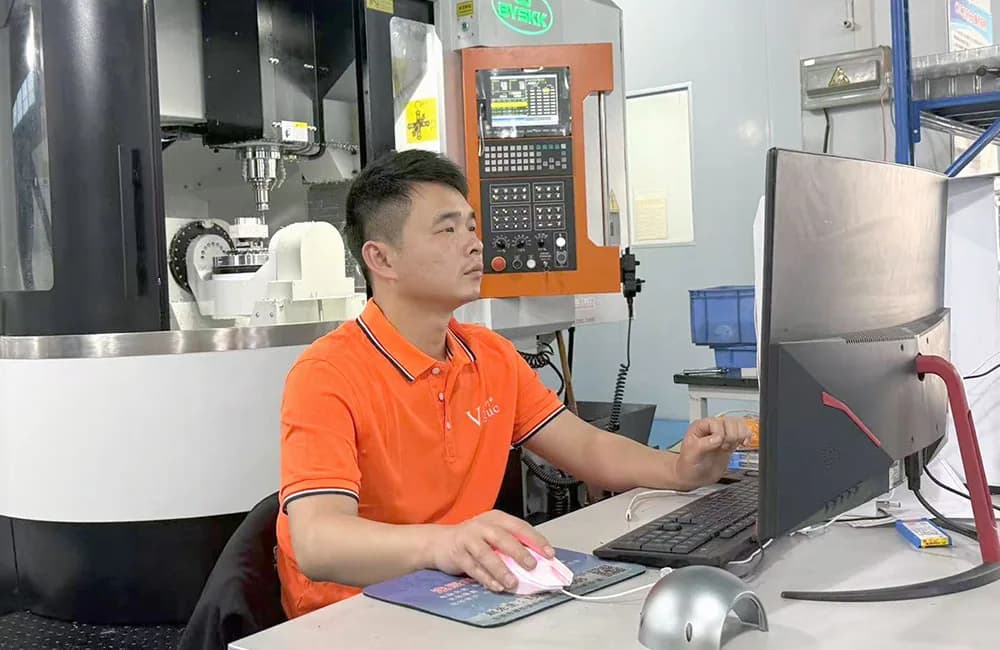
Short answer: Choose a CNC machining supplier in China by verifying process capability against your actual parts—not by comparing machine lists or the lowest unit price. Review engineering communication, quality-system evidence, inspection capability, material traceability, finishing control, first-article performance, change management, packaging and export experience before releasing production.
Introduction
China has a deep precision-manufacturing supply base, but supplier capability varies widely. Two companies may both advertise “5-axis CNC machining” and “tight tolerance,” yet differ in engineering review, process discipline, measurement uncertainty, subcontractor control and response when a part is nonconforming.
For an overseas OEM, equipment manufacturer or product-development team, the cost of a wrong supplier is rarely limited to the rejected batch. Delayed launch, reassembly, premium freight, line stoppage and engineering time can exceed the purchase-order value.
This guide provides a practical sourcing workflow for prototypes, low-volume custom parts and repeat production. It is designed to help technical buyers compare suppliers on a common basis and create an RFQ that exposes risk before an order is placed.
Country of origin is not a capability rating. Apply the same evidence-based process to every supplier, including a familiar domestic source: verify the actual site, people, process, measurement plan and delivered result.
What Makes a CNC Machining Supplier “Reliable”?
A reliable supplier consistently converts your product definition into conforming parts, communicates uncertainty early, documents what was inspected and protects the parts through delivery. Reliability is demonstrated through repeatable behavior rather than claims.
Look for evidence in five areas:
Technical fit: The machines, tooling, materials and secondary processes match the part family.
Quality control: The supplier can inspect critical characteristics with appropriate methods and trace the results.
Commercial clarity: The quote defines scope, assumptions, exclusions, lead time and payment terms.
Communication: Questions are specific, revisions are controlled and problems are escalated early.
Delivery discipline: Finishing, cleaning, documentation, packaging and export are planned—not improvised at the end.
No certification or factory photo proves all five. The buyer needs a staged qualification process.
Step 1: Define Your Requirements Before Searching
Supplier selection begins with a controlled RFQ package. If three shops quote different assumptions, their prices are not comparable.
Use VOGUC’s CNC machining RFQ preparation resources as a starting point for organizing the model, drawing, material, quantity, finishing and inspection requirements.
Include:
3D CAD and a revision-controlled 2D drawing.
Material grade, temper, product form and certification requirements.
Critical dimensions, GD&T, threads, roughness and edge condition.
Surface treatment, color, coating thickness and masking.
Prototype quantity, annual volume and expected batch size.
First article, inspection report and sampling requirements.
Functional tests, cleanliness and special-process requirements.
Delivery date, Incoterm, destination, packaging and labeling.
Approved substitutions or an explicit “no substitutions” note.
If the design is early, say so. A strong supplier can provide DFM feedback, but it should not silently change a functional requirement. Document which party has design authority.
Separate must-have and negotiable requirements
Mark each characteristic as:
Critical: Affects safety, fit, sealing, motion or regulated performance.
Controlled: Important to assembly or appearance but may have an approved range.
General: Covered by the title-block tolerance or workmanship standard.
This helps suppliers quote the right process and gives purchasing a rational basis for cost discussions.
Step 2: Check Capability Against Your Part Family
A long equipment list is not enough. Ask how the supplier would manufacture your specific geometry.
CNC milling
For prismatic housings, brackets, plates and frames, review axis count, travel, spindle capability, probing, fixture strategy and experience with thin walls or deep pockets. A supplier’s CNC milling capability should be evaluated against those features. Five-axis CNC machining is valuable when it reduces setups or improves access, but it is not necessary for every part.
CNC turning and turn-mill
For shafts, bushings, valve components and concentric features, check the supplier’s CNC turning capability, including maximum diameter and length, live tooling, sub-spindle availability, bar capacity and how the shop controls runout between turned and milled features.
Materials
Ask for recent examples in the actual grade—not merely “aluminum” or “plastic.” Machining 6061 aluminum is different from 7075, titanium, 304 stainless steel, PEEK or PPSU. Material-specific knowledge affects tools, heat control, burrs, distortion, cleaning and inspection.
Secondary operations
Determine which processes are performed in-house and which are outsourced: anodizing, plating, passivation, heat treatment, grinding, EDM, welding, laser marking and assembly. Outsourcing is normal, but the CNC supplier must control revision, lot identity, acceptance and corrective action across the chain.
Capacity and production fit
A prototype-focused shop may be excellent for ten complex parts but inefficient for 10,000. A production shop may resist frequent design changes. Ask how the supplier separates prototype, first-article and repeat-production work and how it protects committed capacity.
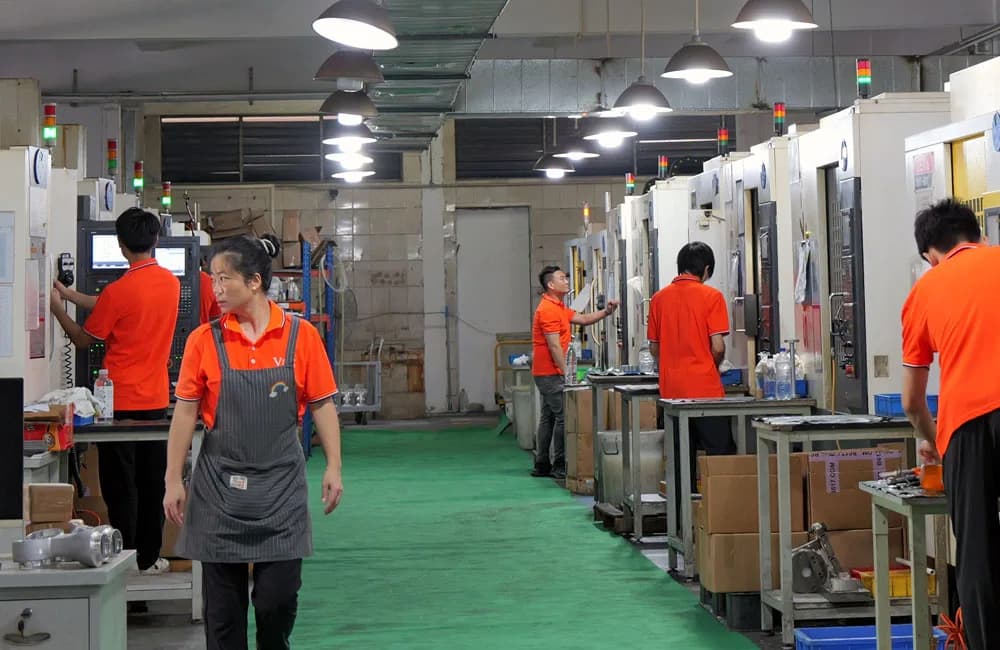
Factory equipment should be evaluated against the actual part family, required setups and expected order pattern—not as a standalone machine-count claim.
Step 3: Evaluate Engineering Communication
The quality of pre-order questions is one of the best early indicators of supplier maturity.
A capable engineer may ask:
Which dimensions are critical to assembly?
Does the drawing dimension apply before or after anodizing?
Can an internal corner radius increase?
Is the specified flatness required in the free state or restrained state?
Which datum alignment should be used for the CMM report?
Is a material certificate or full lot traceability required?
Can a deep pocket be opened or a hole changed to a standard tool size?
Is the quoted quantity a prototype or representative production batch?
Generic replies such as “no problem, we can make everything” provide little confidence. Good DFM feedback should identify the feature, explain the risk, propose an option and wait for approval before changing the design.
Communication test before the first order
Send a small set of real questions and evaluate:
Response time across your working hours.
Technical specificity and English clarity.
Whether the same revision is referenced by both teams.
Whether assumptions are written in the quote.
Whether commercial and engineering contacts agree.
Whether confidential files are handled through a controlled channel.
Fast communication is useful, but accurate communication is more important than an immediate “yes.”
Mid-guide CTA — Test the engineering response: Send one representative drawing with the material, quantity and critical features identified. Ask the supplier to state assumptions, manufacturing concerns and the proposed inspection method before comparing price. Request a drawing review from VOGUC.
Step 4: Verify the Quality Management System
ISO 9001:2015 provides requirements for a quality management system intended to help an organization consistently meet customer and applicable requirements. Certification is useful evidence of a system, but it is not a product guarantee.
Request:
Current certificate and scope.
Certification body and certificate number.
Scope that actually covers machining/manufacturing at the quoted site.
Expiry or transition status.
Basic procedures for document control, calibration, nonconformity and corrective action.
VOGUC presents certificates issued against ISO 9001:2015 and ISO 14001:2015. At this guide's 4 September 2026 review, ISO 9001:2015 remained the current published edition, while ISO 14001:2015 had been withdrawn and replaced by ISO 14001:2026. Buyers should verify certificate validity, scope and transition arrangements with the issuing certification body during onboarding. ISO 14001 concerns environmental management; it does not replace product-quality controls.
Audit the process, not the conference room
If an in-person or video audit is possible, follow one representative order through. VOGUC’s quality-control workflow shows the types of drawing review, in-process inspection, final verification and shipment evidence that a buyer can ask a supplier to explain.
Drawing receipt and revision control.
Material purchase and identity.
Program and setup approval.
First-article release.
In-process inspection.
Outsourced finish control.
Final inspection and records.
Packaging and shipment release.
This reveals more than a general factory tour.
Step 5: Assess Inspection and Measurement Capability
Ask which instruments will verify each critical feature. A 3D CMM inspection process is important for complex datum-based geometry, but owning one does not ensure correct programming, fixturing, calibration or uncertainty evaluation. Smaller planar profiles, edges and hole locations may instead suit 2.5D vision measurement. The drawing and feature geometry should determine the method.
Match the gauge to the requirement
Characteristic | Possible method | Buyer questions |
|---|---|---|
Outside size | Micrometer, caliper | Resolution, calibration and operator method? |
Precision bore | Bore gauge, air gauge, CMM | At what depth and temperature? |
Hole position | CMM, fixture gauge | Which datum alignment and modifiers? |
Flatness | CMM, surface plate method | Free state or restrained? |
Surface roughness | Profilometer | Cutoff and evaluation standard? |
Thread | Go/no-go gauge, optical verification | Class, depth and coating condition? |
NIST inspection-planning research describes measurement-equipment selection as a process driven by design information and measurement requirements, with equipment itself being one source of dimensional uncertainty. For a tight-tolerance part, ask why the proposed method fits the feature and how measurement uncertainty and result disagreements will be handled.
Define the report before machining
Specify:
Ballooned drawing or characteristic list.
First-article versus batch report.
Actual values versus pass/fail only.
Sampling quantity and frequency.
Material and finish certificates.
CMM alignment, report format and units.
Retention period for inspection records.
“100% inspection” is ambiguous unless the inspected characteristics and recording requirement are defined.
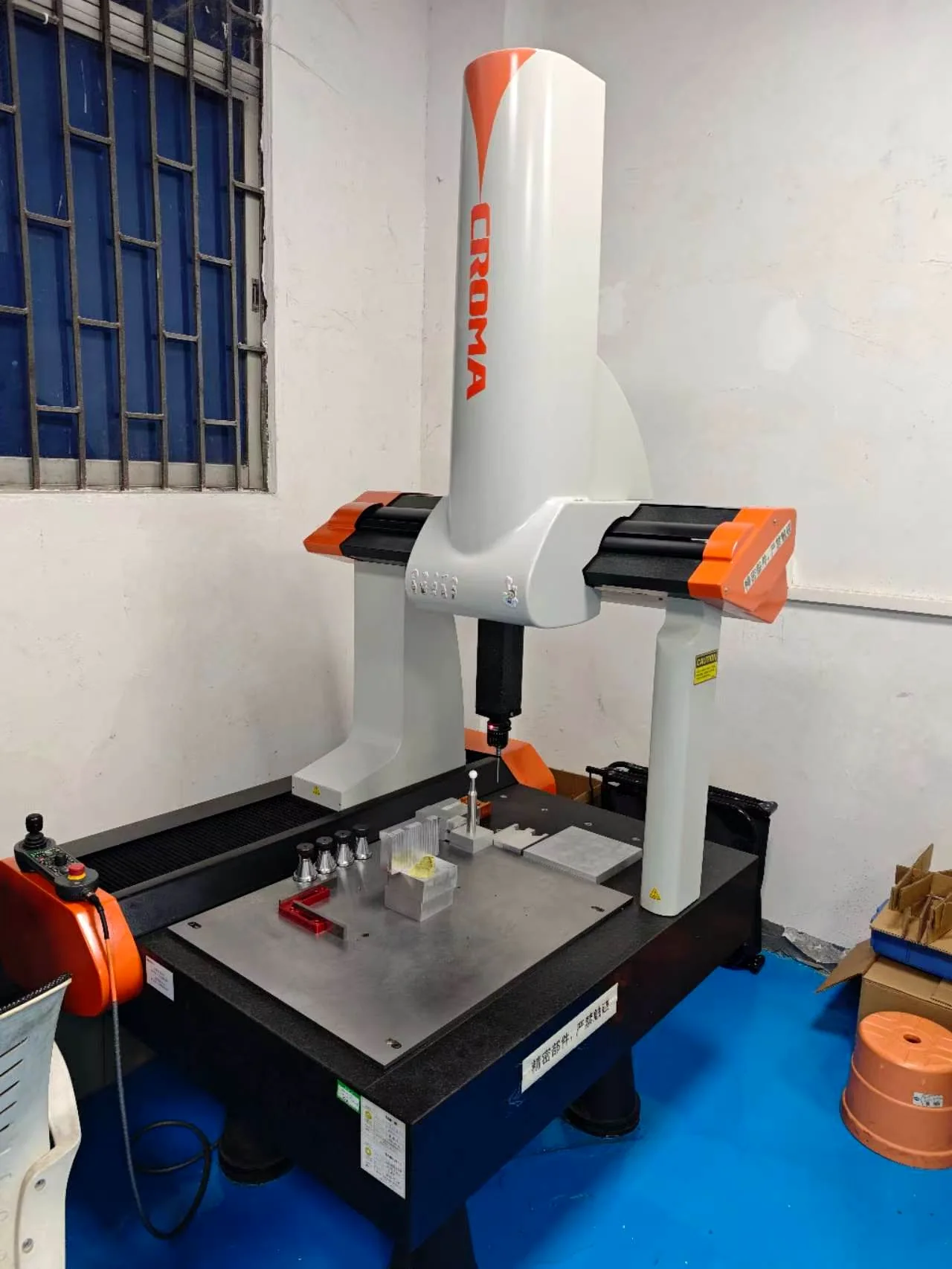
Inspection planning should connect each critical drawing requirement to a suitable method, defined report scope and acceptance decision.
Step 6: Review Material Traceability and Special Processes
Material substitutions are a common global-sourcing risk. A robust supplier should connect the purchase order, material certificate, incoming stock identity, traveler, production lot and shipment.
For critical projects, ask for:
Mill or distributor certificate.
Grade, temper, heat or lot number where applicable.
Positive material identification if required.
Lot segregation during machining and finishing.
Certificate of conformity with the shipment.
For anodizing, plating, heat treatment or passivation, request the special-process supplier’s certification when the application requires it. Agree who owns corrective action if finished parts fail color, coating thickness, corrosion or dimensions.
Step 7: Compare Quotes on Total Scope, Not Unit Price
Create a normalized quote table:
Quote item | Supplier A | Supplier B | Supplier C |
|---|---|---|---|
Material and temper | |||
Quantity and setup | |||
Machining scope | |||
Finish and masking | |||
Inspection/report | |||
Material certificate | |||
Packaging | |||
Incoterm/freight | |||
Tooling/NRE | |||
Lead time basis | |||
Payment terms |
A low unit price may exclude finish, inspection documentation, special packaging, freight or bank charges. It may also assume a broader tolerance than the drawing.
Questions to ask about lead time
Does lead time start after PO, drawing approval, payment or material arrival?
Is finishing included?
Are calendar days or working days used?
Is first-article approval included before the batch continues?
What happens if material or a subcontracted finish is delayed?
Is shipment time separate?
The most useful promise is a dated production plan with dependencies, not “7–10 days” without a starting condition.
Step 8: Run a Paid Sample or First-Article Order
Do not qualify a high-risk supplier only through emails and certificates. Use a representative paid trial.
Choose a part that tests:
The main material family.
At least one critical tolerance or datum relationship.
Required finish and masking.
Documentation and packaging.
Communication through a controlled drawing revision.
Avoid choosing the easiest part if it does not reveal the process you plan to buy. At the same time, do not overload the trial with every possible challenge.
Evaluate more than the part
Score the trial on:
DFM quality and approval discipline.
Quote completeness.
On-time milestone communication.
First-article measurement results.
Finish and cosmetic consistency.
Cleaning, labeling and packaging.
Response to any deviation.
Documentation accuracy.
A supplier that identifies and manages a real issue transparently may be lower risk than one whose perfect sample arrives with no process evidence.
Step 9: Define Nonconformance and Change Control
Before production, agree that no drawing, material, process, finish supplier or acceptance method changes without approval when they affect the controlled scope.
Define the response to nonconformance:
Contain suspect material and stop shipment if required.
Identify affected quantity and lots.
Provide actual measurements and clear photos.
Request use-as-is or rework authorization before acting.
Perform root-cause and corrective action proportional to risk.
Verify the correction on the next lot.
For overseas orders, rework authority is especially important. An unapproved “repair” can turn a recoverable deviation into unusable parts.
Step 10: Inspect Packaging and Shipment Readiness
Precision parts can leave the factory conforming and arrive damaged. Shipment inspection should verify:
Final quantity and part/revision labels.
Individual separation of cosmetic or delicate surfaces.
Rust prevention for ferrous materials.
Protection of threads, sealing faces and sharp features.
Cleanliness and dry packaging.
Desiccant or barrier packaging when justified.
Box strength and export-carton condition.
Certificates and packing list.
Correct ship-to address and Incoterm documentation.
For heavy parts, review crate and lifting needs. For small finished aluminum components, prevent metal-to-metal contact that can create scratches during international transit.
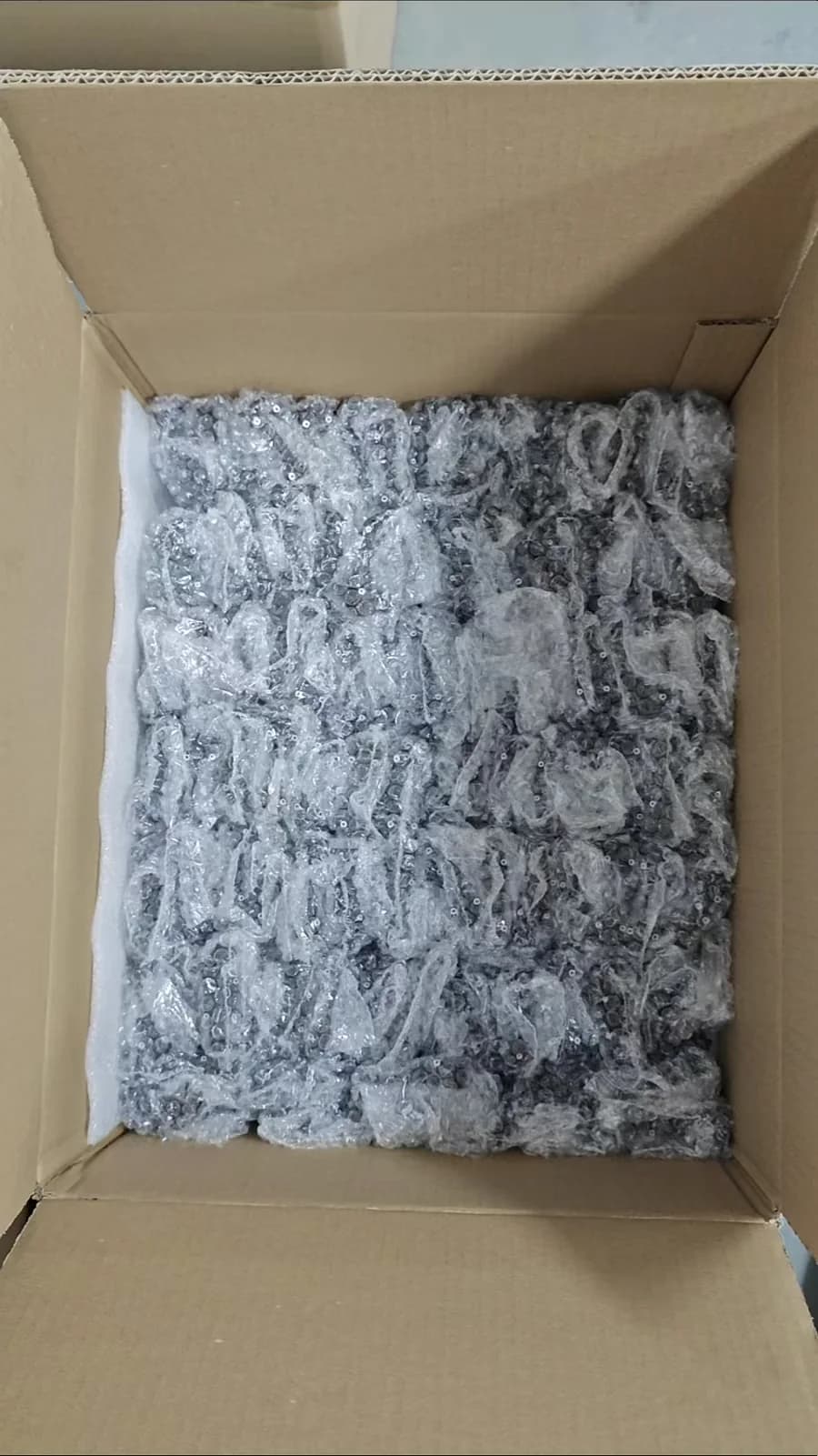
Shipment protection is part-specific: weight, finish, sharp features and cosmetic risk determine separation and restraint.
A 25-Point Supplier Qualification Checklist
Use this before releasing repeat production:
Technical and process
[ ] Supplier has experience with the actual part family.
[ ] Machine travel, axes and workholding fit the geometry.
[ ] Material-specific process knowledge is demonstrated.
[ ] In-house and outsourced processes are clearly identified.
[ ] DFM questions are specific and changes require approval.
Quality and inspection
[ ] ISO certificate scope and validity are verified if required.
[ ] Drawing and revision control are demonstrated.
[ ] Material traceability matches project risk.
[ ] Gauges and CMM methods match critical characteristics.
[ ] Calibration and measurement records are controlled.
[ ] First-article and sampling scope are documented.
[ ] Nonconformance and corrective-action process is agreed.
Commercial and delivery
[ ] Quote includes material, finish, inspection and packaging.
[ ] Tooling/NRE and future unit pricing are separated.
[ ] Lead-time start point and dependencies are defined.
[ ] Payment terms and Incoterm are clear.
[ ] Capacity fits prototype and forecast volume.
[ ] Shipment documentation responsibilities are assigned.
Relationship and resilience
[ ] Engineering and commercial contacts are named.
[ ] Response quality is tested across real questions.
[ ] Confidentiality and file transfer are acceptable.
[ ] Special-process supplier control is understood.
[ ] Backup planning exists for critical equipment/processes.
[ ] Trial order meets part and process expectations.
[ ] Performance will be reviewed using quality, delivery and response metrics.
Red Flags During Supplier Evaluation
Be cautious when a supplier:
Quotes a complex drawing unusually fast without technical questions.
Will not identify material source or outsourced processes.
Sends an expired or mismatched certification scope.
Promises the same tolerance for every size, material and geometry.
Changes material, finish or geometry verbally without revision control.
Provides a “CMM report” with no part revision or datum alignment.
Refuses a paid sample but requests a large production commitment.
Uses customer logos or confidential drawings without permission.
Gives a low price but cannot explain inclusions and exclusions.
Reports a delay only after the promised ship date.
One red flag may have an explanation. Several together indicate a system problem.
How VOGUC Fits This Evaluation Framework
VOGUC describes its Dongguan company and factory as a custom precision CNC machining manufacturer operating 30 CNC machines. Its published CNC machining capabilities include 3-, 4- and 5-axis milling, turning, engineering plastics and metals, prototypes through production, CMM inspection for critical dimensions, and certificates issued against ISO 9001:2015 and ISO 14001:2015.
The published case set spans 6061 and 7075 aluminum, PEEK, PPSU and 304 stainless steel components. These are useful capability indicators, not substitutes for project qualification. A new buyer should still send the actual drawing, verify current certifications, define inspection requirements and use a representative first article.
That is also the right way to evaluate any supplier named in an online article—including the author of the article.
Frequently Asked Questions
How do I find a reliable CNC machining supplier in China?
Create a controlled RFQ, shortlist suppliers with relevant part experience, verify quality-system and inspection evidence, compare normalized quotes, and place a representative paid trial. Reliability should be demonstrated through revision control, measured results, communication and shipment execution.
What certifications should a CNC machining manufacturer have?
ISO 9001:2015 is a common quality-management baseline. Other requirements depend on the industry and product, such as ISO 13485 for regulated medical-device quality systems or sector-specific approvals. Verify the exact standard edition, certificate scope, site, validity and any transition requirements; certification does not replace part-level qualification.
What files does a CNC supplier need for a quote?
Provide a STEP or native 3D model and a revision-controlled 2D PDF drawing. Include material and temper, finish, quantity, critical tolerances, inspection documentation, target delivery, destination and any approved alternatives.
How should I compare CNC machining quotes?
Normalize material, machining, finish, inspection, certificates, packaging, tooling, freight, Incoterm and lead-time basis. A cheaper quote is not lower cost if it excludes a required process or creates quality and delivery risk.
Should I request 100% inspection?
Only where risk justifies it, and define exactly which characteristics are inspected and recorded. A risk-based plan may combine first article, in-process checks, sampling and 100% verification of selected critical features.
Can a Chinese CNC supplier handle prototypes and production?
Many can, but confirm the operating model. Ask how the shop manages design changes, first-article approval, fixtures, process documentation, capacity and repeat-lot control. Validate with a trial that resembles future work.
How can I protect intellectual property?
Use a suitable confidentiality agreement, limit file access, send only needed data, use controlled transfer channels, and ask how drawings are stored and shared with subcontractors. Obtain legal advice for high-value IP and jurisdiction-specific protection.
Conclusion
The best CNC machining supplier is not the company with the longest machine list or the lowest first quote. It is the company whose process fits your parts and whose controls make quality, revision, cost and delivery predictable.
Define the requirement, evaluate evidence, test the process with a representative order and make the production decision from measured performance. This approach reduces sourcing risk while giving a capable supplier the information needed to quote competitively.
Send Your Requirements
If you are qualifying a machining partner for prototypes or repeat production, send VOGUC your CAD files, drawing, quantity, material, finish, critical dimensions and shipment destination. The team can return a scoped quotation and identify DFM or inspection questions before production.
CTA: Request a CNC machining quote — Start with a controlled drawing and a representative part.
Editorial Sources
These sources support the supplier-evaluation statements used in this guide. They do not certify a supplier or part and do not replace the controlled drawing, contract, project-specific quality requirements or verification of a certificate's scope and validity.