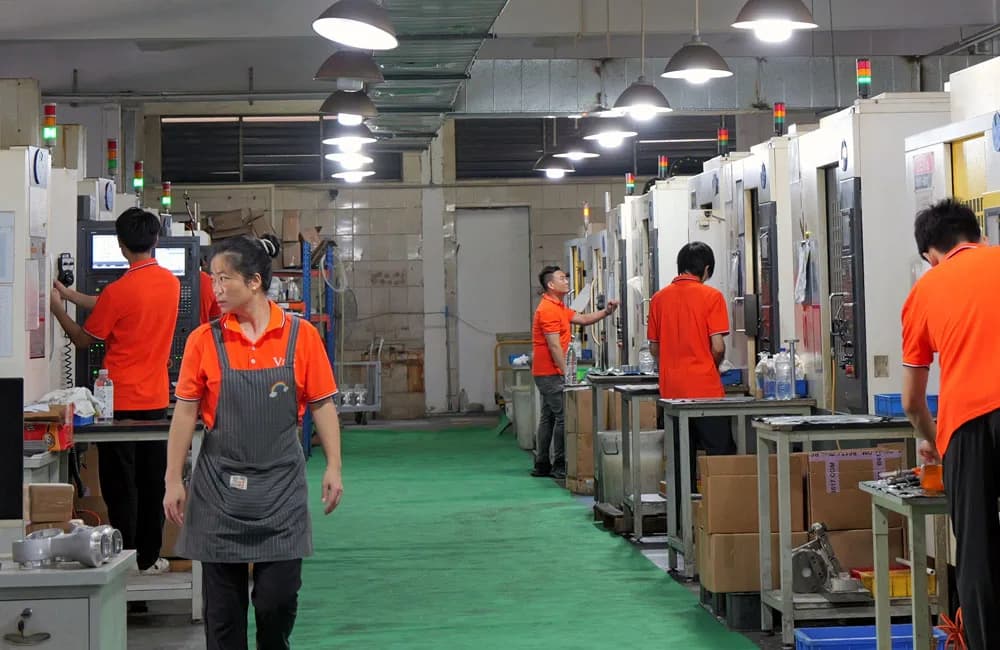
Short answer: CNC machining lead time is the elapsed time required to convert an approved project package into accepted, packed parts—not simply the hours spent cutting metal. It can include drawing review, material sourcing, programming, workholding, machining, finishing, inspection, documentation and packing. Transit time should be stated separately. A responsible supplier confirms the schedule only after reviewing the model, drawing, material, quantity, finish, inspection scope and delivery destination.
For buyers, the most effective way to shorten lead time is not to write “urgent” on an incomplete request. It is to remove uncertainty before the order: issue matching revisions, identify critical requirements, approve realistic alternatives and agree when the delivery clock starts and stops.
The related RFQ, cost, tolerance and supplier-selection guidance is organized in VOGUC’s CNC machining resource center, so schedule decisions can be made from the same controlled project scope.
What Does CNC Machining Lead Time Include?
The phrase “lead time” is often used without a shared definition. One supplier may count from purchase order to ex-works completion. Another may count from approved drawing and payment to arrival at the buyer's facility. Those dates are not comparable.
A useful quotation separates at least three milestones:
Technical release: the point when the model, drawing, material, quantity, finish and inspection requirements are approved for production.
Manufacturing completion: the point when machining, secondary processing, inspection and documentation are complete.
Delivery: the point defined by the agreed shipping scope, Incoterms® rule and named place, such as handover to a carrier or arrival at a named destination. ICC identifies Incoterms® 2020 as the current edition and explains that the rules allocate delivery responsibilities, costs and risks; they do not set the manufacturing clock or promise a transport duration.
The buyer and supplier should also state whether the quoted duration uses working days or calendar days. Public holidays, customs clearance and buyer approval time should not remain hidden assumptions.
Four timing terms should not be treated as synonyms:
Cycle time is the active time for a machining cycle or defined operation; it excludes much of the surrounding project work.
Manufacturing lead time is the agreed elapsed period from a stated release point to a stated manufacturing-completion milestone.
Transit time begins after the agreed shipping handover and depends on the selected logistics route, carrier and border process.
Turnaround time is ambiguous unless the quotation defines both its start and finish points.
The quotation should identify clock-start conditions, buyer or supplier holds, the completion milestone and quote-validity assumptions. A schedule based on available stock or a reserved machine slot may need reconfirmation if the order is released later, the scope changes or an approval remains outstanding.
Lead-time phase | What happens | Information that prevents delay |
|---|---|---|
Engineering review | Revision check, manufacturability questions and route selection | Matching 3D model and controlled 2D drawing |
Material | Grade, condition, stock size and certificate availability are confirmed | Exact material and approved alternatives |
Process preparation | Programming, tools, workholding and inspection planning | Quantity, critical features and acceptance method |
Manufacturing | Cutting, reorientation, deburring and in-process checks | Stable revision and resolved technical questions |
Secondary processing | Heat treatment, anodizing, plating, marking or specialist operations | Process specification, masking and cosmetic criteria |
Final verification | Dimensional checks, reports, certificates and release review | Sampling plan and document format agreed before production |
Packing and transport | Protection, labeling, export preparation and freight | Destination, Incoterm and requested delivery milestone |
This definition prevents a common purchasing error: comparing one quotation that covers machining only with another that covers a finished, inspected and delivered part.
How a Credible CNC Lead-Time Estimate Is Built
A reliable estimate follows the project's critical path rather than adding a generic number of days to every task. Some activities must happen in sequence, some may overlap and others apply only when the drawing requires them.
Planning relationship | CNC project example | Buyer question |
|---|---|---|
Must be sequential | The released drawing is reviewed before the program, fixture and inspection plan are finalized | Which approval starts production planning? |
May run in parallel | Standard material sourcing, tool preparation and inspection-program preparation may overlap after scope release | Which activities are planned concurrently? |
Conditional | Outside finishing, special gauges, first-article approval or custom export packing only apply when specified | Which quoted stages are conditional or excluded? |
Capacity-dependent | A machine slot, external-process batch or inspection resource is available for a defined booking window | How long are the quoted date and reserved resources valid? |
Parallel work can shorten elapsed time, but it can also create exposure if the buyer changes the drawing after material, tooling or inspection preparation has started. The supplier should therefore identify the schedule assumptions, the last date for buyer approvals and any point after which a change requires replanning.
For a repeat order, do not assume the previous lead time automatically applies. Tooling condition, material availability, quantity, revision, external-process capacity and requested delivery window can change. A credible supplier can use prior process knowledge to plan faster, but should still reconfirm the current critical path and promised milestone.
The Eight Main Factors That Determine CNC Machining Lead Time
1. Drawing and revision readiness
Engineering review cannot close when the 3D model and drawing disagree, the revision is unclear or critical requirements are missing. Questions about threads, datums, tolerance, surface texture, finish, material or mating features can stop scheduling before material is released.
Send one controlled package. Identify which file governs if the model and drawing conflict. If a drawing changes after programming or machining begins, the supplier may need to repeat review, update the program, replace material or reinspect completed work.
The CNC machining RFQ checklist provides a field-by-field package buyers can send to every shortlisted supplier.
2. Material grade, condition and availability
“Aluminum,” “stainless steel” or “plastic” is not a complete material requirement. The supplier needs the exact grade, temper or condition, stock form and certificate requirement. A common grade in a suitable bar or plate size may be available quickly; a special alloy, oversized blank, heat-treated condition or traceable lot may require additional sourcing.
Buyer-approved alternatives can reduce sourcing risk, but substitutions must never be made silently. If alternatives are acceptable, request them as separately identified quotation options and obtain design-authority approval.
3. Programming, workholding and setup strategy
A CNC part needs a process plan before stable machining begins. The supplier evaluates feature access, datum strategy, setup sequence, tools, fixture requirements, probing and inspection. A one-piece prototype still needs this preparation even though there is only one finished unit.
Standard workholding may be suitable for a simple prototype. Complex thin-wall geometry, repeated production or relationships across several faces may justify soft jaws, a dedicated fixture or a multi-axis route. The fastest stable process is not always the route with the fewest visible operations; it is the route that controls the drawing without creating excessive proving or rework risk.
Machine availability matters, but lead time is also shaped by programming, setup, inspection and coordinated secondary work.
4. Geometry, tolerance and surface requirements
Deep cavities, thin walls, long-reach features, small internal radii, multiple orientations and difficult deburring can extend programming and machining. Tight or datum-related tolerances may require a more stable sequence, additional finishing passes, controlled handling and a suitable measurement plan.
A blanket tight tolerance is rarely the fastest way to protect function. Apply specific limits to the features that control fit, motion, sealing, alignment or interchangeability. Allow practical general tolerances elsewhere. The CNC machining tolerance guide explains how drawing choices affect process and inspection effort.
Surface requirements matter as well. A functional machined finish, a controlled roughness value and a cosmetic surface are different acceptance conditions. Mark cosmetic zones and define whether tool marks, color variation or handling marks are acceptable.
5. Secondary finishing and outside processes
Machining completion is not delivery completion when the part also needs anodizing, plating, heat treatment, passivation, painting, laser marking or another secondary process. These operations can involve batch schedules, transport between facilities, masking, color approval, thickness checks and post-finish dimensional review.
State the complete finish specification during quotation. Adding a finish after machining has started can change dimensions, masking, thread protection, inspection and packing. For urgent projects, ask whether a functional first article can be evaluated before the final cosmetic finish—but only if that sequence is acceptable for the application.
6. Inspection and documentation scope
Inspection time depends on what must be verified, how it must be measured, the sample quantity and which records must be delivered. A basic dimensional check is not equivalent to a ballooned full dimensional report, CMM output, material certificate and finish certificate.
Measurement programming may need to be planned before the first part is cut. Complex datum relationships may suit a 3D CMM; planar profiles and smaller features may suit vision measurement; height and step features may use a suitable surface-plate setup. The method must fit the characteristic and the agreed acceptance rule.
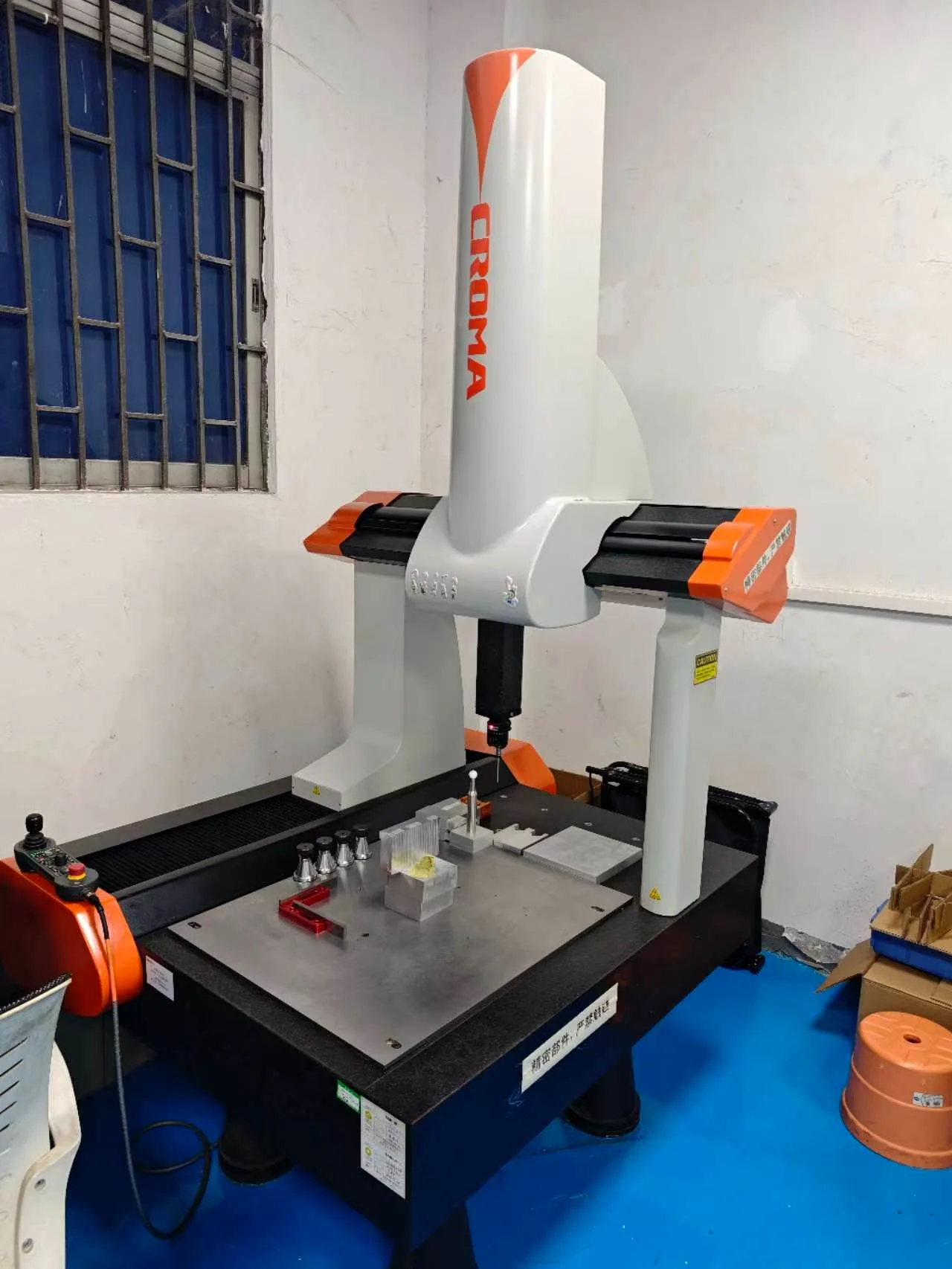
Inspection scope should be agreed before production so measurement and reporting are included in the schedule.
Review VOGUC's quality-control and inspection capability and the guide to full dimensional inspection reports when documentation is part of the purchase requirement.
Need a project-specific schedule rather than a generic promise? Send your model, drawing and delivery requirement to VOGUC. The team will review machining, finishing, inspection and shipment scope before confirming lead time.
7. Quantity, release strategy and changes
Prototype and production orders have different scheduling needs. A prototype may prioritize early technical learning and flexible workholding. Repeat production may require fixture preparation, tool-life planning, staged inspection, packaging quantities and material reservation.
For a larger order, ask whether a first article or pilot quantity should be released before the full batch. A controlled staged release can surface design or acceptance issues before all units are completed. It does not automatically shorten total production time, but it can reduce the risk of discovering a problem at the end.
Once the order is released, control changes. A late revision, new certificate requirement or different finish can invalidate material, programs, inspection plans or completed parts. Use a clear change-approval path and identify the commercial and schedule effect before accepting a revision.
8. Packaging, freight and delivery definition
Finished parts can still be damaged by contact, moisture, loose packing or inadequate separation. Packaging must reflect surface finish, mass, sharp edges, corrosion risk and international transport. Custom protection can require preparation time, especially for cosmetic, heavy or delicate components.
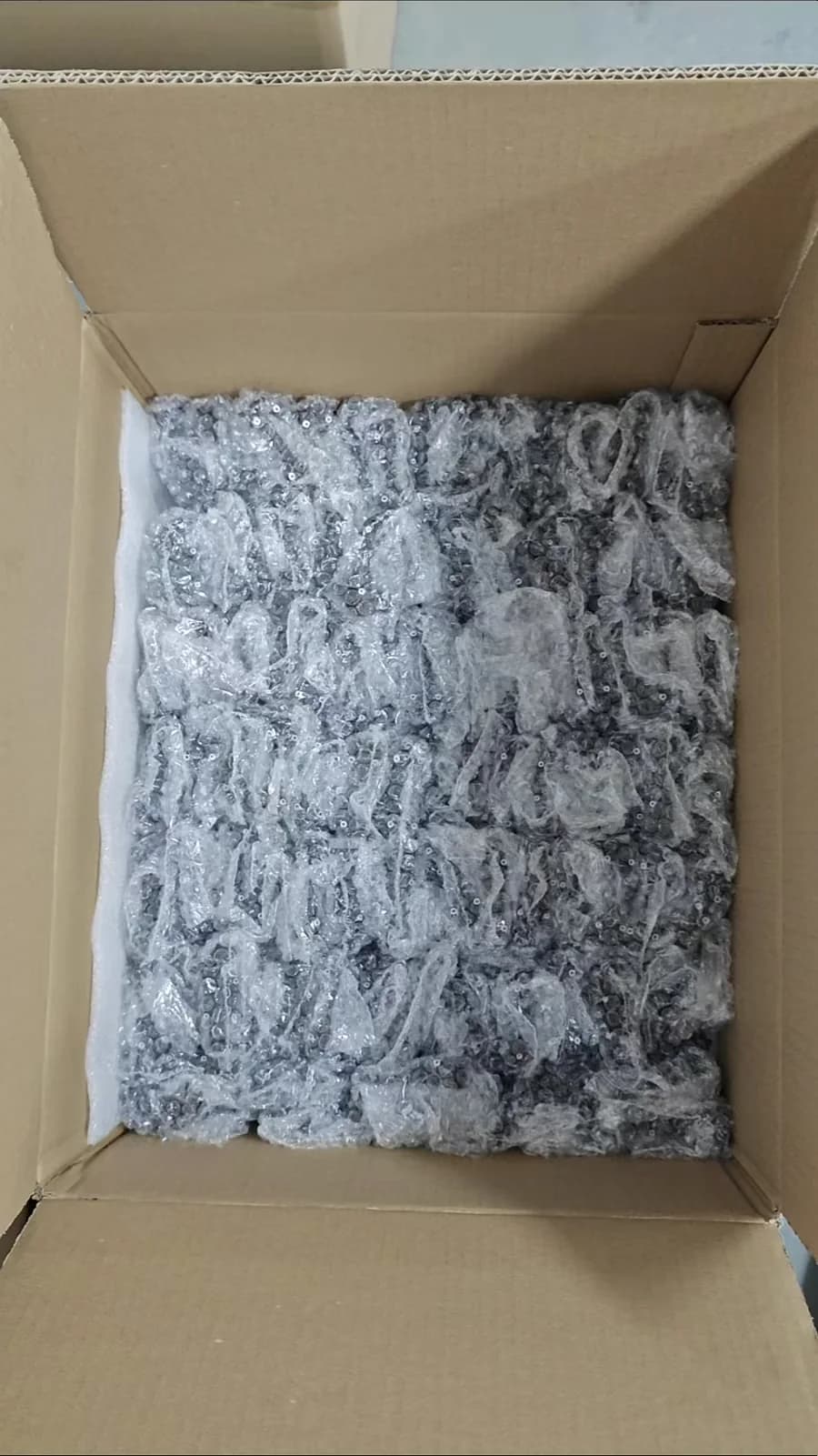
Protective packaging is part of production-ready delivery, not an afterthought after inspection.
State the destination, postal code, requested date and exact Incoterms® 2020 rule with its named place or point. Separate factory lead time from carrier transit and customs clearance. Incoterms® rules define delivery responsibilities and risk allocation, but they do not replace the purchase contract's required date, clock-start condition or carrier estimate.
Prototype Lead Time Versus Production Lead Time
Prototype speed is usually evaluated against a limited quantity and a defined learning objective. The supplier may use flexible workholding and focus inspection on the features needed for fit or function. Production introduces repeatability, throughput, tool life, process control, lot traceability, packing quantities and release planning.
Planning question | Prototype | Repeat production |
|---|---|---|
Primary objective | Validate geometry, assembly or function | Deliver repeatable conforming parts at the agreed rate |
Workholding | Flexible or rapidly prepared | May justify dedicated fixtures or jaws |
Inspection | First-part learning and critical-feature verification | Agreed sampling, records and lot controls |
Material | Small quantity may use available stock | Forecast and lot requirements may affect reservation |
Change tolerance | Design iteration may be expected | Revision stability is essential before release |
Delivery plan | Earliest useful sample milestone | First article, batch release and recurring schedule |
VOGUC supports MOQ 1 and suitable samples may be completed in as fast as three days after engineering review. This is a conditional capability, not a universal promise. Geometry, material availability, finish, inspection scope and buyer response time determine whether a project qualifies. Review the rapid CNC prototyping service for the transactional project path.
A fast prototype example is not evidence of repeat-production capacity or the lead time for another drawing. Buyers should request a project-specific date, batch-release plan and stated assumptions for the actual quantity.
What “Fast” or “Expedited” CNC Machining Should Mean
An expedited request should identify the required milestone and the business reason. “Need parts quickly” is less useful than “two functional samples required at our German assembly site by this date, with these five dimensions reported.”
Before accepting an accelerated schedule, confirm:
The exact released revision.
Whether material is available and approved.
Which features and documents are mandatory for the first delivery.
Whether finishing can follow a functional sample, when technically acceptable.
Whether the quantity can be staged.
The buyer's response time for DFM questions.
The shipping method, Incoterm and named destination.
What happens if a technical change is requested after release.
Acceleration should not mean silently removing inspection, substituting material or shipping inadequately protected parts. A shorter date is useful only if the deliverable still matches the agreed requirement.
An expedited date is not committed merely because it appears in a website message or preliminary discussion. Treat it as confirmed only when the supplier has accepted the released scope, order conditions, capacity plan and delivery milestone in writing.
How Buyers Can Reduce Avoidable Delay
Use this pre-order checklist:
Send a usable solid model and matching revision-controlled drawing.
State the exact material, condition and certificate requirement.
Separate critical dimensions from general tolerances.
Define finish, color, coating thickness, masking and cosmetic zones.
Provide prototype, batch and forecast quantities.
Define inspection characteristics, sample size and report format.
State the delivery destination, Incoterm and required milestone.
Identify approved alternatives and areas open to DFM review.
Assign one person to answer supplier questions and approve changes.
Freeze the released revision or document the schedule impact of changes.
These steps do not guarantee a particular date. They make the quotation and schedule more credible because the supplier can plan the actual deliverable instead of pricing assumptions.
How to Compare Lead-Time Claims in CNC Quotations
Ask every supplier to answer the same questions:
When does the lead-time clock start?
Is the duration in working days or calendar days?
Does it include material sourcing?
Are finishing and subcontract operations included?
Which inspection and documentation are included?
Does the date mean ex-works completion, carrier handover or arrival?
Is transit included, and under which Incoterm?
Are first article and production dates separated?
Which buyer approvals can pause the schedule?
What assumptions or exclusions could change the date?
The same discipline should be applied to price. The CNC machining cost guide explains why a quote is only comparable when material, process, finish, inspection, packaging and logistics scope match.
How VOGUC Plans CNC Machining Delivery
VOGUC is a custom CNC machining manufacturer in Dongguan, China, operating 30 CNC machines in a 2,000+ m² facility. Core services include CNC milling, CNC turning, multi-axis machining and coordinated support from prototype to repeat production.
The quotation review begins with the supplied model and drawing. The team evaluates material and stock, feature access, machining route, workholding, quantity, finish, inspection evidence, packaging and destination. Critical dimensions up to ±0.01 mm are reviewed feature by feature rather than offered as a blanket capability. Available inspection equipment includes 3D CMM, 2.5D vision measurement and digital height measurement.
The schedule is confirmed against this project-specific scope. If a requirement is unclear or an accelerated date creates risk, the issue is raised for buyer review before the manufacturing route is committed.
Frequently Asked Questions
How long does CNC machining take?
There is no universal duration. A complete schedule depends on drawing readiness, material, geometry, setups, quantity, finishing, inspection, documentation, packaging and transport scope. Ask for a date based on the released project package rather than a generic website claim.
When should CNC machining lead time start?
The quotation should define the trigger. A practical start point is technical and commercial release after the supplier has the approved revision, material, quantity, finish, inspection scope and required order conditions. Buyer approval delays should be tracked separately.
Is shipping included in CNC machining lead time?
Not always. Manufacturing completion, carrier transit, customs clearance and arrival are different milestones. State the destination and Incoterm, then ask the supplier to separate production and transport assumptions.
Can a CNC prototype be completed in three days?
Some suitable projects can, after engineering review. A simple geometry in available material with limited finishing and clear inspection requirements is more likely to qualify than a complex part requiring special stock, secondary processing or extensive documentation. VOGUC confirms timing only after reviewing the complete RFQ.
Do tight tolerances increase lead time?
They can when they require a more stable setup, additional finishing, environmental control or more detailed measurement. An isolated realistic tolerance may not change the schedule materially. Apply tight controls only where function requires them and let the supplier review the feature-level process.
Does 5-axis machining always shorten delivery?
No. Five-axis machining can reduce setups and transfers for suitable multi-face or contoured geometry, but programming and machine availability also matter. Simple parts may be completed more efficiently on a stable 3-axis route. Process selection should follow the drawing.
What inspection documents can affect the schedule?
Examples include full dimensional reports, CMM outputs, material certificates, finish certificates and custom traceability records. The effect depends on characteristic count, sample quantity, method and format. Define the package before quotation.
What should I send for an urgent CNC machining quote?
Send the released 3D model and 2D drawing, material, quantities, critical tolerances, finish, inspection requirements, destination and required milestone. Identify which requirements are mandatory and which alternatives can be reviewed.
Can I calculate CNC lead time by adding a fixed duration for every stage?
Not reliably. Some activities can overlap, while others cannot begin until a drawing, material, first article or buyer decision is released. The committed date should follow the project's current critical path, available capacity and defined holds—not a generic sum copied from another part.
Conclusion: Confirm the Complete Delivery Route
CNC machining lead time is the result of a controlled sequence, not a machine-speed promise. Engineering review, material, setup, cutting, finishing, inspection, documentation, packing and transport must align around one released requirement.
Buyers can reduce avoidable delay by sending a complete RFQ, responding quickly to technical questions, controlling revisions and comparing quotations against the same start point and delivery definition. A credible supplier should explain the assumptions behind the date and identify risks before production begins.
Send Your Required Date with the Drawing
Send your CNC machining project to VOGUC with the model, drawing, material, quantity, finish, inspection requirements, destination and target milestone. The team will review the manufacturing and delivery route before confirming quotation and lead time.
Editorial Sources and Standards Context
These references support the drawing, process-management and delivery terminology used in this guide. They do not set a universal CNC lead time or replace the released drawing, purchase order, contract, agreed inspection plan, Incoterm or carrier schedule.